Architectural Services
What is SmartScore Certification? A US AEC Firm’s Guide to Smart Building Design Support
-
 Sreela Biswas
 - August 27, 2026
- 10:47 am


U.S.-based local architectural representation, ensuring communication, accountability, and delivery expectations, managed close to the client.
Explore more
Discover our architectural design excellence through a curated selection of projects.
Explore more
Take a look at how Uppteam can elevate your projects with expert engineering solutions.
Explore more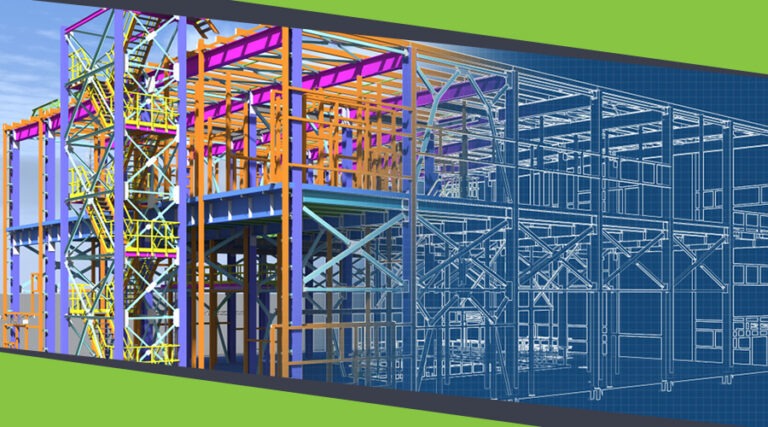
Our Structural Support Services can enhance your structural engineering projects with expert support.
Explore more
Uppteam delivers precise and reliable surveying and mapping solutions to help you make informed decisions.
Explore more
Whether you're working on residential, commercial, or industrial buildings..
Explore more
Uppteam’s Virtual Admin Support can help you with all your administrative tasks..
Explore more
Our experts work as your Second Eye Services expert.
Explore more Sreela Biswas
Is your firm really ready for the next certification your commercial clients will demand? For decades, WELL and LEED told tenants that a building was green and healthy. Now a new benchmark is asking a different question entirely, which is whether a building is actually smart or not.
SmartScore certification, developed by WiredScore, assesses how extensively digital technology is woven into a building’s operations, security, and occupancy experience. US developers are lining up for it, and the AEC companies behind the coordinated models, MEP systems, and BIM data that make SmartScore achievable are becoming just as important as the certification itself.
It is a global rating system for measuring how efficiently a building utilizes digital technology, data, and automation to service its occupants. WiredScore, the New York-based certification body that also created the original Wired Certification for internet connectivity, instituted SmartScore in 2021 as a companion standard emphasizing the operational intelligence layered on top of connectivity.
Buildings earn one of four tiers (Certified, Silver, Gold, and Platinum) based on an autonomous audit of their technology stack. Unlike LEED, which centers on energy and materials, or WELL, which focuses on occupant health, SmartScore pivots on digital maturity. It basically evaluates how well a building’s systems talk to each other, safeguard data, and respond in real time.
WiredScore certifies infrastructure through a six-stage process: registration, kickoff, technical evaluation, evidence review, certification, and promotion, with results authenticated by independent auditors. In a nutshell, SmartScore signals that a building can curtail its whole-life carbon footprint, sharpen the in-office experience, and sustain resilience against cyber threats and evolving occupier expectations.
WiredScore began its journey in 2013, backed by then-Mayor Michael Bloomberg and real estate leaders seeking standardization of digital infrastructure in commercial buildings. The organization has since certified over 4,000 buildings globally and serves more than 1,000 landlords across 42 nations.
Interest is increasing in the USA, particularly for three reasons. First, North America already commands around 43% of the worldwide smart building market, giving the region the biggest concentration of assets that could pursue certification. Second, federal momentum is pushing the market. The General Services Administration is investing around $80 million from the Inflation Reduction Act into smart building technology across 560 federal properties. Third, in March 2026, Meter, an internet infrastructure firm, acquired WiredScore for roughly $1 billion, a sign that digital connectivity and smart-building standards are becoming core construction infrastructure.
For AEC firms already serving commercial developers, the combination of the above three means SmartScore requests are likely to keep landing on RFPs throughout 2026 and beyond.
The scorecard fundamentally evaluates nine pillars of building performance, and AEC teams should recognize most of them as design and coordination problems beyond simple facility management checkboxes:
Notably, systems integration and data management are the two pillars most directly influenced by BIM coordination choices made during design and preconstruction.

SmartScore was established for building owners, developers, and portfolio managers who need proof that their assets are tech-ready, not just green. Landlords across several countries have already used SmartScore results to market buildings as future-ready, evidence that the certification travels well beyond any single market.
The certificate itself is only the final step. The party actually responsible for delivering a certifiable building is the AEC team involving the BIM managers, VDC coordinators, MEP engineers, and design leads who decide how electrical, fire protection, security, and low-voltage systems are modeled, routed, and documented long before an occupant opens a tenant app. In practice, these professionals are the ones who actually determine whether a project passes SmartScore review.
A vital aspect to mention here is that WiredScore’s own certification guidance was developed after assessing over 900 commercial buildings, underscoring how much of the scoring comes down to document design decisions rather than finished hardware alone.
Most AEC businesses in the USA already run lean, and adding SmartScore-level systems coordination on top of standard CD production stretches internal teams thin. AEC design support closes this gap effectively by tackling the technical groundwork the certification’s audit actually examines:
This is the design-phase work, completed months ahead of when WiredScore-accredited professionals ever walk the site. Firms that build this coordination into their established workflow, instead of scrambling for it after a client requests, are the ones winning repeat SmartScore-related engagements.
SmartScore is becoming the shorthand US tenants and investors use to distinguish genuinely smart buildings from buildings that simply have Wi-Fi. Winning this shorthand begins with disciplined MEP design, electrical and fire protection documentation, and unified BIM coordination. This is precisely the systems integration and data management groundwork that SmartScore audits.
uppteam’s BIM coordination and clash detection service, along with MEP design support service, provides AEC firms with that exact capability. Our expert team delivers federated architectural, MEP, and fire protection models, Navisworks-based coordination cycles, and audit-ready documentation as an embedded extension of your team. If your next project mandates certifiability, not just constructibility, reach out to uppteam about coordinating it right the first time.