





Uppteam

The Hidden Price of MEP Coordination Mistakes for Architects

  • Sreela Biswas
  • September 26, 2025
  • 12:22 pm

Here’s a situation that’ll sound familiar: You’re three months into construction on what should be a straightforward office building project. The MEP drawings appeared to be fine during review. Nothing jumped out as problematic. Then your phone rings at 9:47 PM on a Tuesday.

The mechanical contractor is frustrated. It turns out that the main supply ducts can’t fit where they’re supposed to go. There’s a beam in the way that somehow nobody caught during coordination. The electrical panels? They’re overloaded because the load calcs didn’t account for the tenant improvements that got added two months ago.

Now you’ve got an angry general contractor, a developer asking pointed questions about “project management,” and a team that needs to drop everything to fix problems that weren’t even yours to begin with. However, here’s the thing: when stuff like this happens, nobody really cares whose fault it was.

When Coordination Systems Fail

Consider a recent industry case involving a mid-rise office building where the architecture firm approved MEP drawings that appeared adequate during initial review. However, construction crews discovered that HVAC ducts were routed directly through structural beams, an issue that escaped detection due to rushed clash analysis.

The consequences were immediate and costly: a week-long redesign process, additional steel coordination meetings, revised ceiling layouts, and a frustrated developer who held the architect accountable regardless of where the error originated.

According to the Construction Industry Institute, MEP-related change orders account for approximately 15-25% of total project change costs, with coordination issues being the leading contributor. These problems occur more frequently than many firms acknowledge, and their impact extends across three critical areas.

The Comprehensive Impact on Architecture Firms

Timeline Disruption

Coordination failures transform smooth construction progressions into emergency redesign situations. Teams must redirect resources from new projects to address existing problems, not because design concepts have evolved, but because technical coordination has proven inadequate.

Financial Consequences

Industry data shows that MEP coordination errors can increase project costs by 8-12% through change orders, material rerouting, and extended construction schedules. Even when clients absorb these costs, architects must explain why projects exceeded their managed expectations.

Professional Reputation

Architecture firms ultimately bear responsibility for drawing coordination. Research by the American Institute of Architects indicates that client satisfaction drops by 40% when MEP-related issues cause significant delays, regardless of design quality. A series of coordination missteps can permanently damage client relationships and future referral opportunities.

Root Causes of Persistent MEP Coordination Issues

Documentation Inadequacies

Many projects suffer from incomplete technical documentation, with critical details often deferred until the construction phase. This “figure-it-out-later” approach creates vulnerability when space constraints become apparent.

Rushed Calculation Processes

Competitive pressure often leads to abbreviated load calculations and simplified routing analysis. While these shortcuts may appear cost-effective initially, they frequently result in expensive corrections during construction.

Insufficient Quality Control

Traditional coordination processes lack systematic verification methods. Without structured review procedures, errors compound throughout design development phases.

Communication Gaps

Weekly coordination meetings and regular updates are often sacrificed for schedule compression, creating information silos between disciplines.

Advanced MEP Coordination Solutions

National MEP Engineers has developed comprehensive coordination protocols that address these systemic issues through structured, technology-enhanced processes.

Foundation Documentation

Every project begins with detailed Basis of Design Reports that establish clear performance parameters, load requirements, and spatial constraints. This documentation eliminates ambiguity and provides measurable standards for coordination.

Systematic Quality Assurance

All construction document sets undergo rigorous third-party quality reviews using advanced clash detection software, including Autodesk Navisworks and Trimble Connect. This process identifies potential conflicts before they reach construction teams.
<h4Proactive Project Management

Dedicated project managers provide weekly coordination updates and maintain 24-hour response protocols for emerging issues. This approach prevents minor discrepancies from developing into significant problems.

Integrated Technology Solutions

The firm employs Building Information Modeling (BIM) coordination using Revit MEP, AutoCAD MEP, and specialized load calculation software, including Elite Software and Carrier HAP. These tools ensure accurate calculations and precise spatial coordination.

Collaborative Coordination Process

Regular interdisciplinary coordination meetings involve structural, architectural, and MEP teams throughout the design development process. This collaborative approach identifies conflicts early when corrections are least expensive.

Measurable Results and Industry Recognition

At National MEP Engineers, we have noticed that projects completed using the enhanced coordination methods show significant improvements:

  • Reduction in MEP-related change orders by 75%
  • Construction timeline improvements averaging 10-15%
  • Client satisfaction scores exceeding industry averages by 30%

The Strategic Value of Professional MEP Coordination

The hidden cost of MEP coordination mistakes extends beyond immediate financial impact; it erodes the trust that forms the foundation of successful architectural practice. Firms invest considerable energy in creating inspiring spaces, but unresolved technical conflicts can overshadow even the most exceptional design work.

However, these risks are entirely preventable. With systematic MEP coordination processes, technical precision becomes the invisible foundation supporting architectural vision. When projects reach completion, every system functions exactly as intended, allowing design excellence to shine without technical complications.


Moving Forward with Confidence

Architecture firms deserve MEP partners who understand that coordination excellence protects both project success and professional reputation. With over 25 years of experience in the industry, National MEP Engineers possess the expertise necessary to handle projects with confidence and responsibility. Through methodical processes, advanced technology, and unwavering attention to detail, technical coordination transforms from a project risk into a competitive advantage.

The difference lies in choosing partners who treat MEP coordination not as a necessary task, but as an essential element of architectural success.

MEP Design Services in California – What to Expect & How Much They Cost

  • Sreela Biswas
  • September 25, 2025
  • 8:17 am

Looking for a reliable and efficient MEP design services provider in California? MEP design, in other words, Mechanical, Electrical, and Plumbing design, is of great importance in any modern construction project. And California’s construction landscape is no different.

However, navigating the complexities of MEP design is a daunting task. Regarding California, if you are planning an infrastructure project and still wondering what to budget for MEP design, it is normal. It is critical to understand that with the exclusive energy regulations and seismic requirements in the Golden State, precise MEP planning is non-negotiable.

In this environment, understanding what MEP design entails and its associated costs, especially in the context of California, can be a game-changer.

This blog guide offers clear insights into MEP design services in California. In detail, it will explore what businesses should expect from the specialized service providers and the actual cost benchmarks.

Understanding MEP Design Services

Most straightforwardly, MEP design contains the preparation, coordination, and documentation of an infrastructure’s mechanical, electrical, and plumbing aspects. More specifically, MEP design covers:

  • Mechanical: HVAC systems, energy management, ductwork
  • Electrical: Power distribution, lighting, backup systems
  • Plumbing: Water supply, drainage, fire protection
  • Additional Disciplines: Acoustic controls, fire alarms, and automation systems


For businesses involved in construction and building operations, all the above components are vital when energy efficiency and compliance are priorities. In the specific context of California, these systems should be in alignment with national codes and Title 24 requirements. This implies that designing for highly efficient and sustainable workflows is not optional anymore but mandatory.

Let’s understand each aspect a bit more clearly. From the mechanical standpoint, engineers design HVAC systems that must conform to Title 24 energy standards. They also account for the air quality of the indoors, ventilation rates, heat load calculations, and equipment sizing. They should correspond to efficiency goals while upholding the regional standards.

As for electrical services, modern construction projects in California are progressively incorporating daylight harvesting systems, lighting controls, and battery storage. The purpose here is to fulfill sustainability and grid-interactive criteria specific to California developments.

On the plumbing front, systems related to domestic water supply and sanitary drainage are vital. Additionally, in California, buildings that are required to follow fire safety regulations often feature sprinklers and standpipe systems designed to meet local safety guidelines.

With growing technological advancements, these components are effectively coordinated through BIM workflows.

Why California Needs Dedicated MEP Expertise

Undoubtedly, the energy efficiency standards, especially Title 24, in the Golden State of the U.S., are stringent. These guidelines, along with the state’s seismic zone, need an immensely technical approach to MEP design. A building’s mechanical systems have to attain high-efficiency ratings, often capitalizing on heat recovery and VRF systems.

Likewise, electrical systems gradually include renewable inputs and smart lighting. The goal here is to reduce costs and dependency on grids. On the other hand, neglecting seismic resilience would be a grave mistake. It is vastly important, making it essential for MEP systems to be highly operational and safe during and following an earthquake.

That’s why top-end MEP design service providers, such as National MEP Engineers, consistently emphasize the importance of structural collaboration in minimizing damage risk.

Apart from these, construction projects in California require MEP designers to handle:

  • Cutting-Edge HVAC Controls and Demand-Based Ventilation: Pioneering MEP design service providers in California report that incorporating innovative systems drastically boosts energy efficiency. Most of the developers in California expect this.
  • Sector-Specific Needs: Multifamily housing projects in the Golden State take advantage of coordinated MEP systems. The purpose behind them is to curtail on-field assembly times and speed deliverables. For transportation-related projects, efficient MEP design guarantees proper ventilation, passenger comfort, compliance with energy-saving standards, and resilience against natural disasters.

Deliverables to Expect

High-standard and accurate MEP design services in California typically offer:

  • Thorough plans and schematics for HVAC, electrical, and plumbing.
  • Load calculations, along with equipment schedules.
  • 2D and 3D BIM integration with clash spotting.
  • Piping layouts, riser diagrams, and fixture schedules.
  • Construction-ready documentation with notes, tags, and legends.


One of the most prominent names in this industry, the National MEP Engineers, underscores this holistic approach. Similar pioneering MEP design service providers in California proceed in the same way to ensure functional and code-compliant solutions. It is also vital to mention that these service providers prioritize exploiting BIM for the best results.

Factors Influencing MEP Design Costs in California

The expenses related to MEP design rely significantly on complexity, scope, efficiency needs, and the type of construction project.

  • Building Type: Multifamily and office construction projects generally cost less in comparison to high-tech infrastructure, such as data centers.
  • Efficiency Objectives: Building projects that target net-zero certification or LEED certification include complex and rigorous testing processes.
  • System Complexity: Complex projects like data centers need extra systems and supervision, enhancing design efforts.

Typical Costs Associated with MEP Design

Generally, for the most part, the construction expense remains the same as predicted ahead of a project’s beginning. However, there can be some variations, but not too much. MEP design services constitute quite a sufficient percentage of the overall construction cost. This cost largely depends on the project scope, complexity, and type.

Usually, for residential projects in California, this cost falls within the range of $0.50 to $3.00 per square foot. As for larger and more complex projects, this price often goes up further. Considering this, the MEP design expenses for every five thousand square feet may vary between $2,500 and $15,000.

Apart from this, there are the fees associated with change orders. They are extra charges levied by a contractor every time there is a modification in the actual construction work. As a result, MEP design might also change. The approximate additional cost for changes in MEP design can only be determined depending on the alterations needed for particular projects.

Compliance expense is another vital factor within the total costs linked to MEP design services. In the specific context of Title 24 standards, costs can be roughly around:
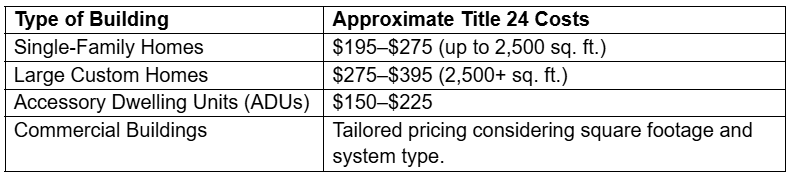


Cost-Efficiency Tactics

There are some easy, yet highly effective strategies that construction projects in California can apply to keep a project’s MEP design expenses to a minimum.

  • Automated BIM Integration: Detecting clashes at the initial stage helps eliminate expensive rework during construction.
  • Standard Equipment Packages: Utilizing well-recognized HVAC and electrical elements assists in avoiding custom engineering markups.
  • Phased Title 24 Modeling: Timing energy simulations during the later stages of the design procedure decreases iterations.
  • Capitalize on Modular Systems: Specifically, in multifamily infrastructure projects, driving down on-site labor expenses and time with the help of factory-fabricated MEP assemblies.

Choosing the Ideal MEP Design Partner

There are certain factors that construction developers in California need to take into account when selecting the ideal MEP design partner:

  • First of all, the provider must have relevant code experience. They need to be well-versed in Title 24, Title 19, and regional permitting requirements.
  • Top-level BIM proficiency is the next significant factor. Before opting for the best design service provider, developers should ask about Navisworks or Revit workflows and clash resolution approaches.
  • Firms with proven track records in data centers, multifamily, or transit hubs typically deal with energy and coordination complexities better.
  • Always search for MEP design firms that provide tiered fees and offer explicit descriptions of the involved deliverables.
  • Operational assistance is another crucial aspect. MEP design service providers who offer post-design help at the time of construction and commissioning should be the first choice for California builders and developers.

Conclusion

MEP design is compulsory in construction projects in California. It has the capacity to directly influence energy efficiency, project timeline, code conformance, and lasting performance. Expert California-based MEP design firms know about this and build services that revolve around BIM coordination, readiness related to Title 24, and realistic cost efficiencies.

For developers seeking a partner they can rely on to navigate California’s construction complexities, there is no better choice than Uppteam. We are experts in delivering precise, compliant, and optimized MEP design solutions. Explore our MEP design services and unravel how our California-ready solutions are the best for your requirements.

Fire Safety Design for a Higher Secondary School in Putnam County, Crescent City, Florida

  • Sreela Biswas
  • September 24, 2025
  • 1:13 pm
Project Type: Institutional
Software: Revit, Navisworks, CHVAC,BIM 360
Project Duration: 24 weeks

Task Assigned

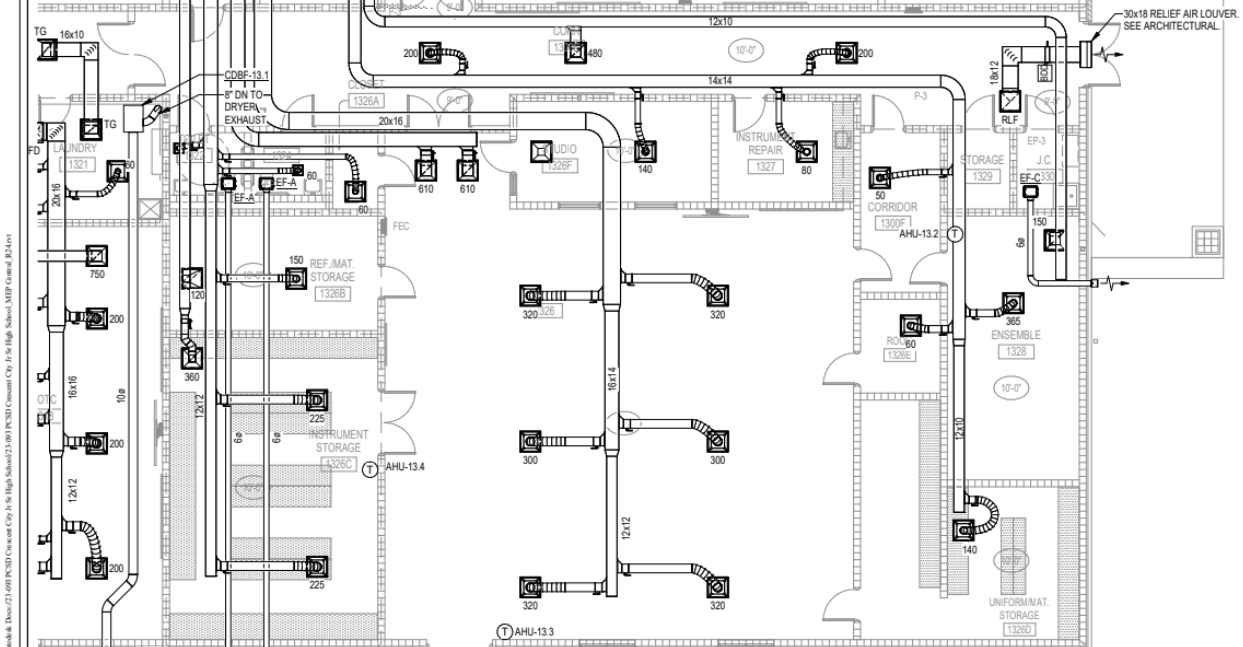
Uppteam's MEP team was tasked with creating fire safety drawings in accordance with the existing MEP system for the educational institute. From performing load calculations to coordinating ducting layouts and equipment placement for classrooms, labs, offices, and common spaces, we modeled all MEP systems for 3D visualization and coordination.
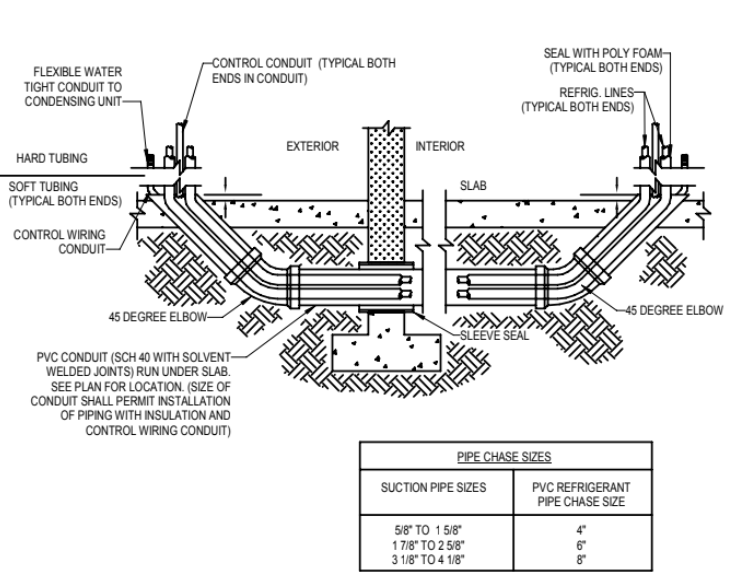
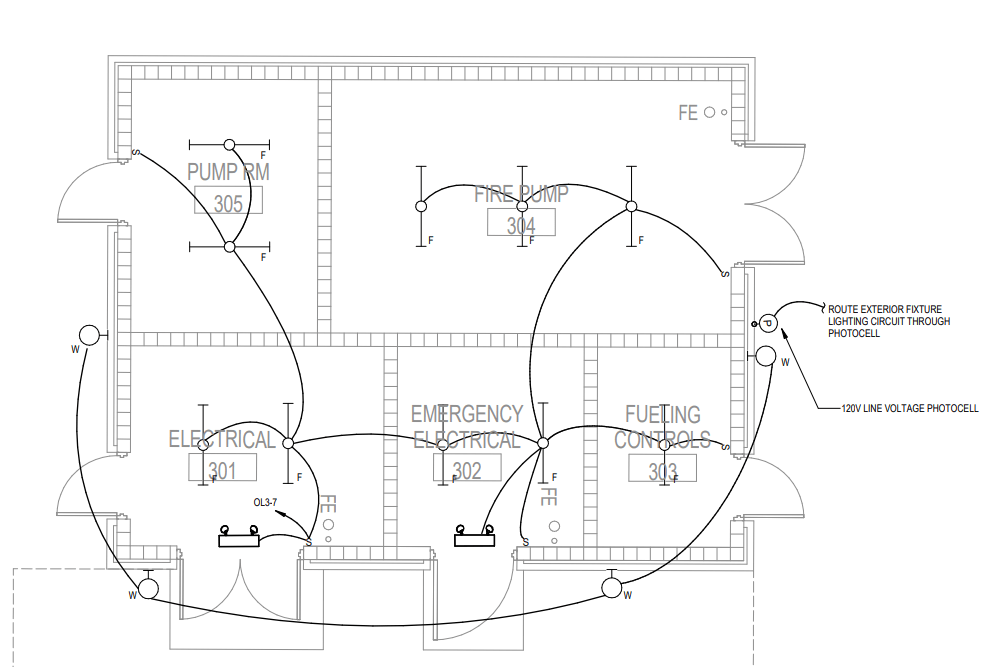
Project Timeline

  • Phase 1: Created the Schematic Design (SD) set and submitted for review.
  • Phase 2: Delivered 50% Construction Documents (CD) set, incorporating design refinements and stakeholder feedback.
  • Phase 3: Submitted 100% CD set, including fully coordinated MEP and fire safety drawings, ready for construction execution.

Additional Notes

  • The CAD backgrounds provided did not include ceiling heights or elevation data, which created uncertainty in vertical coordination.
  • The team initially modeled systems at standard ceiling heights, then adjusted reference planes once actual elevation data was received. This approach ensured that modeling progress continued without delays while maintaining accuracy.

Retrofitting the MEP-FP System for Maintenance Garage with Office in Bronx, New York

  • Sreela Biswas
  • September 9, 2025
  • 12:25 pm
Project Type: Commercial
Software Used: Revit, Navisworks, COMcheck
Project Duration: 950 hours

Task Assigned

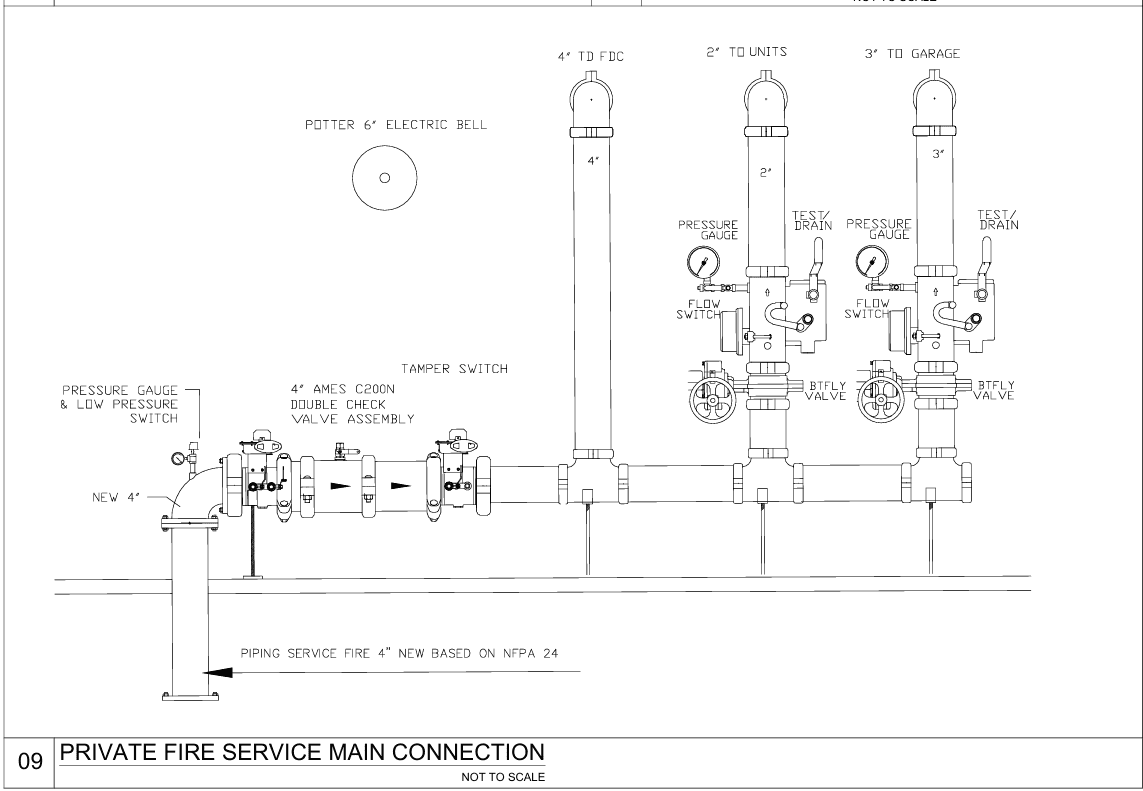
Our team was engaged to assess and redesign the outdated MEP systems for a single-story Vehicle Repair Shop and Parts Storage/Sales Facility. The scope of work encompassed a comprehensive evaluation of existing infrastructure and services, preparation of updated CAD-based design documentation, close coordination with the structural and architectural teams, and support during phased implementation to ensure minimal disruption to ongoing operations.
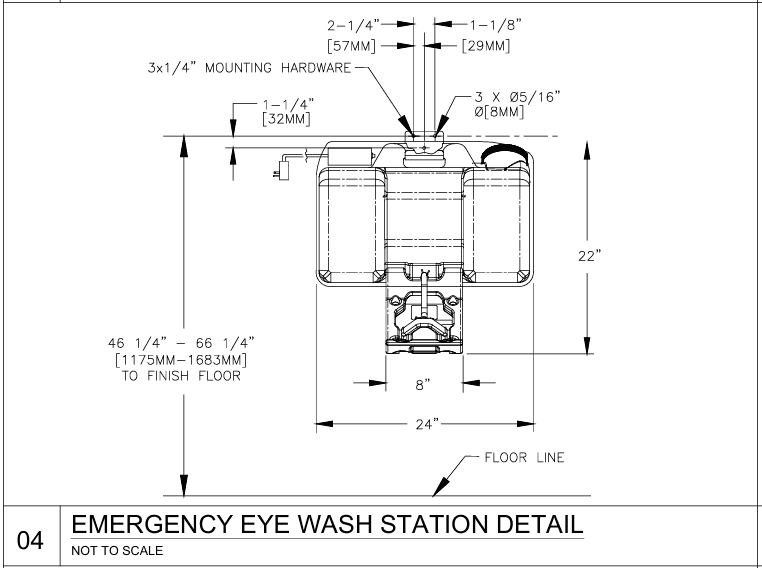
Project Timeline

  • Phase 1: Renovation of vehicle repair shop
  • Phase 2: Renovation of part storage
  • Phase 3: Renovation of office area

Additional Notes

  • The existing electrical equipment was outdated, and the repair area housed numerous miscellaneous loads. So, we implemented new equipment without revising the leading service, while devising load-management strategies to prevent system overloads.
  • The building required extension of fire protection piping and verification of system pressure across the facility. We conducted hydraulic calculations from scratch and verified pressure availability at each sprinkler head.
  • We successfully upgraded electrical systems without requiring floor shutdowns. Also, our team achieved renovation of MEP-FP services at minimal cost while ensuring compliance and operational continuity.

Plumbing Design for an Animal Hospital in South Burlington, Vermont

  • Sreela Biswas
  • September 4, 2025
  • 12:21 pm
Project Type: Hospital
Software Used: AutoCAD, Excel
Project Duration: 2 weeks

Task Assigned

The client assigned us to design the entire plumbing and mechanical system for a newly proposed veterinary clinic, replacing an oil company facility. The team was tasked to retain the existing restroom while supporting the existing infrastructure. The MEP team's scope of work was to design with efficient mechanical and plumbing systems, seamlessly integrating them with the existing structure to avoid any floor demolition.


Project Timeline

  • Phase 1: Designing the first layout and finalizing it with the client's approval
  • Phase 2: Final documentation of the entire plumbing and mechanical system

Additional Note

  • Accommodating multiple sinks, washers, and floor drains was challenging, as the client wanted to keep the original flooring. However, our team suggested installing SniSWIFT Pro pumps below the sinks to drain water without damaging the floor.
  • While we retained the existing toilets, we took advantage of a 4" utility pipe that was adequate for the facility’s sanitary demand. New sanitary risers were introduced and strategically placed within a chase.
  • The facility included dog and cat cages along with a dedicated dog run, which introduced a high risk of waste accumulation and required proper sanitary drainage. We proposed a raised platform in these areas, allowing the installation of a pump at the platform’s end. This setup enabled us to direct the waste flow into the ceiling-level piping.

Top MEP Engineering Companies in Arizona

  • Sreela Biswas
  • September 4, 2025
  • 8:25 am

The need for niche MEP support for modern AEC businesses is indispensable. This is mainly because MEP engineering brings thorough expertise in designing, integrating, and maintaining complex building systems. Each of these elements is critical to a building’s functionality, safety, and ultimately occupant comfort.

Additionally, these days, AEC businesses need to comply with codes, endorse sustainability, and utilize cutting-edge technologies for accurate coordination. An expert MEP firm is the one that helps AEC businesses with all these essential industry requirements.

When it comes to Arizona, the construction sector demands niche mechanical, electrical, and plumbing expertise. The foremost reason for these demands is the extreme temperature differences. The state is known for its hot and dry desert conditions in most areas. Consequently, it mandates appropriate water conservation and energy efficiency.

Besides, Arizona’s rapid development positions an unprecedented requirement for skilled MEP experts who must be proficient in designing systems that function reliably in harsh desert conditions. Yet, there should be no compromise in fulfilling strict regulatory standards.

Therefore, having a detailed comprehension of this state’s competitive MEP engineering market can be of great help to architects, contractors, and property developers. Only then will they be able to choose the most ideal MEP partner, considering technical competencies, project experience, and proven track records.

National MEP Engineers

If we talk about an MEP firm that is making a lot of noise currently across the U.S., including Arizona, it is NationalMEPEngineers. Steadily, this firm is becoming the go-to partner for the majority of AEC companies for any size of MEP projects.

NationalMEP is consistently delivering top-quality, comprehensive multidisciplinary design solutions. This is reflected in clients’ testimonials. Specializing in rapid, energy-conscious, and code-adherent MEP designs, this firm is delivering robust solutions through all project phases. A big part of this appreciation goes to the qualified and experienced MEP professionals working for the firm. They major in HVAC, electrical power, and plumbing design that can be adjusted considering diverse weather conditions.

The mechanical engineering solutions of NationalMEP zero in on HVAC systems that can be engineered for specific climate settings in Arizona. The firm’s electrical engineering capabilities include power distribution design, lighting systems, renewable energy integration, and load calculations. All of these are key to Arizona’s solar potential. Plumbing solutions focus on technologies to conserve water and efficient distribution systems. These services are highly effective in countering Arizona’s water scarcity challenges.

  • Desert Climate Expertise: NationalMEP is proficient in designing HVAC systems for Arizona-specific temperature variations and arid conditions.
  • Emphasis on Water Conservation: This company is committed to creating cutting-edge plumbing designs with a focus on maximizing water efficiency and satisfying Arizona’s conservation needs.
  • Solar Integration Capabilities: Highly skilled electrical engineers at the company can provide renewable energy solutions suitable for Arizona’s abundant solar resources and net metering regulations.
  • Regulatory Compliance: Proficient engineers guarantee that all designs satisfy state-specific building codes and energy-saving standards.

Overall, NationalMEPEngineers enables U.S.-wide project delivery competencies with niche Arizona expertise. Their dedication to quality stands out through the reliable delivery of code-adherent and safe MEP designs.

Ardebili Engineering

Ardebili Engineering is the next promising MEP engineering firm serving Arizona-wide AEC businesses. This firm’s holistic MEP engineering solutions cater to a broad range of industries. The company follows a process-driven approach with an emphasis on boosting communication and project delivery superiority while ensuring client satisfaction.

Process-centric company culture, effective MEP collaboration, and timeline management without sacrificing quality are the three main pillars of Ardebili. This company has designed some exceptional, cutting-edge HVAC, automatic temperature control, exhaust, and clean room systems that make it one of the pioneers in this domain.

The electrical engineering services of this company involve site electrical distribution, lighting and power, emergency power, and specialty systems. Besides, advanced plumbing systems, process piping, water supply, and fire sprinkler design are among the major plumbing solutions that this company delivers.

Ardebili has worked on several MEP engineering projects in Arizona, including some notable ones, such as the Phoenix National Laboratories in 2021 and the Phoenix Navigation Center in 2022.
Kimley-Horn

The next prominent full-service MEP engineering firm operating throughout Arizona is Kimley-Horn. This company offers a diverse range of services. Alongside planning, civil, and structural design solutions, Kimley-Horn delivers high-standard MEP expertise. All these services are offered under a unified management and quality control approach. The company has been serving both private and public clients on projects spanning small traffic studies to high-capacity infrastructure developments.

Some lauded Arizona projects of this firm include master engineering services for Mayo Clinic’s campuses in Scottsdale and Phoenix. Kimley-Horn handles master planning, water and sewer systems, roads, traffic access, grading, drainage, parking layouts, walkways, and MEP services.

  • Robust Service Portfolio: The firm has demonstrated capabilities in both MEP services and civil, structural, and planning solutions for comprehensive project delivery.
  • Healthcare Expertise: Kimley-Horn has also demonstrated top-level expertise and experience in complex healthcare facility designs.
  • Technology Collaboration: MEP services of this firm exploit energy modeling, BIM, and electrical studies to elevate design coordination and detect construction issues.
  • National Resources: With over a hundred offices across the country, this company mobilizes niche talent and delivers personalized support for Arizona projects.

CM Associates Engineers

CM Associates Engineers has also made a prominent mark in Arizona’s MEP engineering landscape. Since its inception in the 1970s, this firm has grown into a full-service consulting business with extensive MEP and fire protection design service solutions. This organization’s portfolio ranges from manufacturing, industrial, resort, educational, government, and medical facility projects.

The team holds licenses and certifications in mechanical, electrical, and fire protection engineering, along with LEED AP BD+C, CxA, and Certified Energy Manager credentials. The firm focuses on strong leadership involvement, local business ties, and advanced expertise across all MEP services. Their dedication to collaboration and reliable service sets them apart in Arizona’s competitive market.

CM Associates brings a wide variety of capabilities – from full-spectrum MEP services, fire protection engineering, energy assessment and modeling, and commissioning services to Revit BIM. This 360-degree approach ensures coordinated design solutions optimized for cost-effectiveness and performance.

LSW Engineers

LSW Engineers has also gained a significant reputation across the U.S. AEC sector for providing unparalleled MEP and technology engineering design services. Headquartered in Phoenix, this company has delivered extensive MEP engineering solutions for projects across Arizona that have helped garner immense popularity in the rest of the country.

This firm demonstrates thorough capabilities in complex project delivery through continuous emphasis on responsive service offerings and quality designs. LSW’s engineering solutions consist of comprehensive construction documents facilitating successful project implementation. The team maintains an organized approach that comprises defining project scope, developing construction documents, and supporting ongoing construction.

  • Extensive Experience: Taking advantage of its 75 years of industry experience and over twenty thousand completed projects, LSW delivers proven MEP engineering solutions.
  • Multi-Layered Services: Starting from early planning to construction completion, this firm offers full-spectrum MEP and technology engineering design solutions.
  • Focus on Quality: Commitment to quality designs and responsive service assists clients in achieving project targets and upholding performance standards.
  • Construction Support: Nonstop construction support assures appropriate system integration and project success.

Conclusion

Clearly, Arizona’s MEP engineering market is highly competitive, with established companies having diverse specializations and proven expertise. These companies have shown immense success by addressing the state’s unique environmental challenges.

However, when choosing the ideal partner for your next project, a few critical aspects should be kept in mind: technical competency, regional experience, and time-tested success. These elements are pivotal considering Arizona’s challenging climate conditions.

Uppteam’s extensive partnered work experience with companies like NationalMEPEngineers has constantly provided effective and high-quality outcomes for AEC firms in Arizona. Our comprehensive remote support services allow firms to avail specialized expertise and sustain cost-friendly project delivery via proven MEP design solutions.

Top MEP Engineering Firms in Illinois

  • Soumen
  • September 2, 2025
  • 12:06 pm

Searching for the best MEP engineering firm in Illinois to support your next construction project? Well, your search stops here. This article lists the top six MEP engineering firms offering their comprehensive services throughout Illinois.

Finding the ideal MEP engineering or design partner can be a challenging task. Illinois hosts several recognized MEP engineering firms serving various sectors involving residential, commercial, healthcare, and industrial facilities. Indeed, this U.S. state’s construction industry is robust. Consequently, it demands niche expertise in building systems design, energy-saving solutions, and regulatory adherence that satisfy strict regional and federal requirements.

This comprehensive exploration outlines pioneering Illinois-based MEP engineering companies, their specialized competencies, market focus, and service solutions that differentiate them within the highly competitive engineering consulting marketplace.

National MEP Engineers

One of the most prominent names in MEP engineering and design in Illinois is NationalMEPEngineers. Across the U.S., this firm has steadily gained recognition in the construction industry for the top-notch MEP services it delivers.

This leading firm offers comprehensive multidisciplinary design solutions for commercial, residential, and industrial projects. NationalMEP specializes in expedited, energy-efficient, and code-conformant MEP designs. The company is constantly growing with its qualified workforce, which delivers robust services from initial conceptualization through extensive project management phases.

This company’s expertise entails mechanical HVAC systems, plumbing infrastructure design, and electrical power distribution. Mechanical engineers at NationalMEP design heating, ventilation, and air conditioning systems that control indoor temperature and optimize air quality. The electrical engineering services of this firm encompass power distribution design, load calculations, lighting systems, and riser diagrams for various applications.

  • Holistic Design Solutions: NationalMEPEngineers offers complete MEP design solutions from conceptualization to project completion.
  • Focus on Energy Efficiency: This organization specializes in energy-saving building systems that diminish operational expenses while fulfilling sustainability requirements.
  • Code Compliance Competency: Expert engineers make sure that all designs are in alignment with regional, state, and federal regulatory norms. This is to ensure safe building operations.
  • Expedited Project Delivery: Standardized design procedures allow for accelerated project schedules without sacrificing quality or compliance standards.

Undoubtedly, NationalMEP facilitates project delivery capabilities across the U.S. Their dedication to quality is exemplified through the consistent delivery of code-adherent and safe MEP designs.

Elara Engineering

The second company in our list of top MEP engineering firms is Elara Engineering. This company operates as a full-service, State of Illinois MBE-certified consulting engineering firm. Elara specializes in MEP, fire protection, and technology systems. The primary focus of this organization is on designing, building, and operating utility systems, encompassing pre-design and post-construction services. Their proficiency includes development, costing, delivery, and construction monitoring attributes.

One of the most distinctive aspects of Elara is its emphasis on diversity and employee development. Through this approach, the firm maintains high professional standards. Its team contains talented engineers and experts who are passionate about curtailing carbon footprints using innovative, sustainable building systems.

Elara Engineering caters to numerous market sectors across Illinois and surrounding regions. Their robust approach encompasses preliminary planning, in-depth engineering design, and continuous construction support services. The MBE certification of the company brings additional value to projects needing minority business participation.

Mintropy MEP Consulting

The next firm in this list is Mintropy MEP Consulting. This is a full-service MEP consulting engineering business. Mintropy provides detailed mechanical, electrical, and plumbing services. With a combination of natural phenomena principles and contemporary building systems, this firm develops environmentally conscious design solutions. Their mechanical engineering services emphasize sustainable systems aligned with natural ecosystem principles.

Concerning electrical engineering expertise, Mintropy offers distribution design, lighting design, emergency power systems, and arc flash studies. Their wide-ranging electrical services guarantee trustworthy power distribution while upholding safety standards. Lastly, plumbing engineering services integrate domestic water supply systems into facility designs. The focus here remains on efficiency and conservation.

  • Market Specialization: Mintropy comes with market-specific solutions customized to client requirements. Its services serve multiple building types and occupancy specifications.
  • Emphasis on Sustainable Design: This organization’s primary focus is on creating environmentally friendly designs. The purpose is to reduce resource usage and environmental impact.
  • All-Encompassing Service Portfolio: Starting from MEP design and consulting to construction support, Mintropy delivers a wide variety of services throughout project lifecycles.
  • Client-Centric Approach: This company maintains its focus on client satisfaction through quality deliverables and responsive communication.

Client testimonials reflect Mintropy’s top-notch technical knowledge, patience in describing design choices, and consistent delivery performance. Consequently, this firm upholds a reputation for prompt and budget-conscious project completion.

McGuire Engineers (MEPC Inc.)

This company operates as an established Chicago-based engineering business offering MEP and fire protection services. McGuire has delivered effective engineering services for several buildings within the Columbia College Chicago campus and other notable projects. The company has an impressive portfolio involving complex renovations and new construction across different market sectors.

Another prominent project that McGuire has worked on is Uber’s corporate headquarters MEP systems. This organization emphasizes repositioning prevailing buildings for new uses while elevating infrastructure systems. Their experience comprises historic building renovations and contemporary corporate office developments.

McGuire offers robust MEP engineering, along with LEED certification assistance and technology integration solutions. Their capabilities extend to building commissioning and performance optimization in every operational stage. 

AAA Engineering

Another well-recognized name in Illinois’ MEP engineering spectrum is AAA Engineering. This company is committed to delivering consistently high-quality mechanical, electrical, plumbing, communications, and traction power engineering services. Their proficiencies also involve construction administration, management, and inspection services.

AAA has the Illinois Department of Transportation’s pre-qualification grant. This company caters to bridge, transit, roadway, water, aviation, wastewater, and facilities projects. Their dynamic portfolio exhibits capability throughout several infrastructure projects.

  • Minority Business Certification: The minority-owned status of AAA Engineering offers value for projects needing diverse business participation.
  • Multi-State Operations: This organization operates in the Illinois, Indiana, and Wisconsin markets with holistic MEP engineering services.
  • Infrastructure Specialization: Proficiency spans utilities, transportation, and facilities engineering across the private and public sectors.
  • Construction Assistance: Services consist of construction management, administration, and inspection competencies beyond design engineering.

Moreover, maintaining IDOT pre-qualifications enables AAA to participate in state transportation projects. Their extensive service portfolio covers a wide range of client needs across several engineering disciplines.

Syska Hennessy Group

The final name in this list of top MEP engineering firms operating in Illinois is Syska Hennessy Group. Operating as a trailblazing engineering company, Syska specializes in comprehensive MEP, information and communication technology, and architectural lighting. With a workforce of over 650 experts, this company delivers comprehensive engineering services for projects of all sizes. Syska’s over 95 years of dominance in the industry signifies sustained brilliance and innovation.

The organization offers ICT, fire/life safety, and smart system services with a focus on decarbonization and sustainable design. This group aligns its mission with client goals at the time of delivering cutting-edge solutions across diverse markets. Its global presence further demonstrates extensive high-capacity project delivery capabilities.

Syska’s operational approach emphasizes meticulous client engagement and next-gen design approaches that improve built environments. The firm always upholds a rigid focus on decarbonization practices and sustainable building systems. 

Conclusion

By now, you must have developed a detailed understanding of the most promising and effective MEP engineering firms in Illinois. While all six businesses listed in this exploration have extensive experience in the MEP engineering field, each brings unique capabilities.

Uppteam has worked with NationalMEPEngineers significantly in terms of the MEP design requirements, and our collaborative success rate is unmatched. Our comprehensive remote support services, with the perfect integration of the most appropriate MEP engineering firm, can deliver your next MEP project’s assured success.

Top 5 Fire Protection MEP Design Mistakes (and Strategies to Avoid Them)

  • Soumen
  • August 22, 2025
  • 8:43 am

Nearly 40% of fire protection system failures during emergency response stem from design oversights that could have been prevented during the planning phase. These aren’t exotic edge cases or unavoidable circumstances—they’re predictable gaps that occur when teams rush through critical process steps.

Fire protection design operates as a complex chain of decisions that must withstand code review, value engineering, trade coordination, and real emergencies. When any link in this chain breaks, the consequences ripple through project timelines, budgets, and most importantly, occupant safety.

The following five mistakes appear repeatedly across projects of all scales and complexities. More importantly, each one can be systematically prevented with the right approach and documentation practices.

1. Ignoring Local Code Amendments Leads to Costly Surprises

The Challenge 

Design teams often work from baseline codes—NFPA standards, IBC/IFC requirements, and general building bylaws—while missing critical local amendments or Authority Having Jurisdiction (AHJ) preferences. The result appears compliant on paper but fails during plan review. Common oversights include specialized fire flow calculations, non-standard hydrant spacing requirements, unique fire pump room access provisions, modified standpipe classifications, and specific roof access requirements for high-rise buildings.

Project Impact Scenarios 

Plan reviewers frequently request additional valves, specialized signage, or alternative detection and suppression strategies for special occupancies during late-stage reviews. Teams encounter expensive main rerouting due to hydrant placement standards that weren’t captured during initial design phases. Multiple resubmittals occur after contractors have already submitted bids, creating schedule delays and credibility issues with all stakeholders.

Prevention Strategies 

Create a comprehensive “local code variance” document at project kickoff that captures all differences between national standards and local amendments in a single, accessible location. This document should remain active within the model set, ensuring every trade team can reference current requirements.

Schedule early coordination meetings with the AHJ to clarify interpretation of gray areas, including smoke control acceptance testing procedures, fire command center layout specifications, and fire department connection placement requirements.

Implement documentation with full traceability—when requirements stem from AHJ-specific directives, clearly tag them in drawings and specifications to prevent removal during value engineering phases.

Uppteam’s Methodology 

Every project begins with a Code Basis Brief—a focused, project-specific document that highlights local amendments, special occupancy requirements, and AHJ expectations. This brief integrates directly into the Revit model and updates as project decisions evolve, maintaining a single source of truth accessible to all team members.

2. Poor Trade Coordination and BIM Clash Management Lead to Field Rework

The Challenge 

Fire protection systems designed in isolation inevitably collide with structural elements, ductwork, cable trays, and architectural features. While sprinkler head spacing may meet code requirements, the layout conflicts with architectural design intent. Risers interfere with structural bracing, and branch lines require extensive field modifications. The outcome: project delays and disputes between trades.

Project Impact Scenarios 

Sprinkler heads frequently conflict with linear lighting fixtures or acoustic baffles in finished ceilings. Standpipe routing becomes blocked by structural bracing within stair enclosures, requiring expensive modifications. Field changes to accommodate duct mains compromise hydraulic system balance and performance.

Prevention Strategies 

Model fire protection systems at an appropriate Level of Development (LOD) early in the design process, using dimensioned sprinklers, mains, and drops rather than generic placeholders. This approach makes coordination meetings productive and decision-focused.

Establish frozen ceiling zones before issuing construction documents by utilizing coordinated ceiling plans that integrate light fixtures, return air devices, speakers, and sprinkler heads as unified design elements.

Implement iterative clash detection processes rather than single-point checks, treating coordination as an ongoing design loop with weekly clash runs and systematic issue tracking.

Uppteam’s Methodology 

Fire protection coordination occurs within shared model views that display architectural and MEP “no-fly zones,” followed by structured clash detection cycles with clear issue identification and ownership assignments. Rather than generating overwhelming clash reports, the process produces focused, actionable registers that specify what to move, by how much, and the reasoning behind each change. Every item receives resolution before the construction document release.

3. Skipping Hydraulic Analysis Creates Expensive Surprises

The Challenge 

Design teams often rely on assumptions about system performance—believing layouts will pass hydraulic requirements or that municipal water supply is adequate—while skipping or delaying actual hydraulic calculations. During submittal review or pre-construction phases, teams discover the system requires larger pumps, modified head spacing, or completely re-sized mains. These changes prove both expensive and time-consuming to implement.

Project Impact Scenarios 

Remote area sprinklers experience pressure shortfalls that compromise system effectiveness. Pump sizing based on rules of thumb rather than actual demand calculations leads to expensive oversizing or dangerous undersizing. Long branch runs create friction losses that weren’t accounted for in preliminary designs.

Prevention Strategies 

Conduct hydraulic simulation early and regularly, running preliminary calculations when layouts reach 60-70% completion to verify feasibility and guide routing decisions.

Utilize realistic water supply data by confirming hydrant flow test methodology and aging factors, then document all assumptions (such as 10-20% safety margins) within the Basis of Design documentation.

Link calculations directly to system geometry, establishing processes to automatically trigger calculation updates after meaningful changes to routing or head spacing.

Uppteam’s Methodology 

The team maintains living hydraulic models that link directly to BIM geometry. Any modifications to loop length, pipe sizing, or head count automatically trigger recalculation requirements. Each package includes a comprehensive Hydraulic Summary that documents supply conditions, demand calculations, safety factors, and pump sizing rationale, ensuring reviewers and contractors understand precisely what the system performance depends upon.

4. Inadequate Documentation Complicates Maintenance and Operations

The Challenge 

Construction document sets get issued, and design teams move forward to new projects, leaving operations and maintenance expectations unclear. Critical information about test points, isolation zones, and maintenance access is not included in the final documentation. Systems become difficult to commission and nearly impossible to maintain properly, leading to failed inspections and compliance issues down the road.

Project Impact Scenarios 

Inspector’s test connections end up missing or inaccessible during commissioning activities. Building staff lack precise valve indexing or zone mapping for routine maintenance and emergency response. Fire alarm sequences don’t align with actual installed devices, and comprehensive as-built drawings never materialize.

Prevention Strategies 

Design with maintenance requirements as a primary consideration, clearly showing working clearances, valve reach envelopes, and test drain access on plans and sections.

Integrate commissioning requirements by including device testing sequences, acceptance criteria, and responsibility assignments within specification appendices.

Establish as-built completion processes that require contractor redlines and deliver clean, searchable documentation packages, including both PDFs and model files with indexed devices and valve tags.

Uppteam’s Methodology 

A dedicated Maintenance & Access Layer gets added to all drawings, providing clear callouts for isolation valves, test points, and minimum clearance requirements. Post-construction deliverables include a Digital Closeout Set featuring updated PDFs, model views filtered by system and zone, and a comprehensive valve and device index that facility teams can practically use for ongoing operations.

5. Ignoring Real Occupant Behavior Undermines System Effectiveness

The Challenge 

Designs that meet numerical code requirements often ignore how people move through buildings during both normal operations and emergencies. Travel distances appear acceptable in plan view until furniture layouts, security turnstiles, or tenant fit-out walls get installed. Voice evacuation system audibility gets assumed rather than verified against actual space conditions. Stair pressurization and smoke control concepts operate independently of realistic egress scenarios.

Project Impact Scenarios 

Security lobbies and café areas create bottlenecks during emergency drills and actual evacuations. Compartmentation strategies and door hardware selections inadvertently slow egress rather than facilitate it. Voice evacuation messages become inaudible in open office environments or noisy production zones due to poor speaker placement.

Prevention Strategies 

Coordinate egress planning with actual tenant fit-out requirements, validating travel distances and exit capacities against current interior design models rather than base building shell conditions only.

Conduct scenario-based reviews using crowd flow analysis or egress modeling for higher-risk occupancies, including assembly spaces, high-rise buildings, and healthcare facilities.

Verify audibility and intelligibility by planning speaker and strobe placement based on room acoustics and actual use patterns rather than uniform grid layouts copied from previous projects.

Uppteam’s Methodology 

Egress and audibility reviews are conducted against current interior design models, identifying potential bottlenecks introduced by furniture arrangements and access control systems. When appropriate, light-touch occupant flow studies help stress-test stair capacity, lobby areas, and refuge floors, then adjust detection, notification, and smoke control assumptions based on realistic use patterns.

Real Project Case Studies

800,000 Square Foot Distribution Center 

Bid documents assumed adequate municipal water pressure without conducting preliminary hydraulic calculations. Early hydraulic analysis revealed a 12-15 psi deficit at the remote area under peak demand conditions. The team appropriately sized the fire pump and rebalanced the distribution loop, avoiding a costly mid-construction system redesign.

12-Level Healthcare Fit-Out Project 

Ceiling coordination exposed conflicts between sprinkler heads, linear lighting systems, and nurse call devices throughout patient corridors. The team implemented a coordinated ceiling “kit” approach for each corridor module and locked the design before construction documents—resulting in zero head relocations during the build phase.

42-Story Mixed-Use Tower 

Local code amendments required additional standpipe hose valve locations and specific fire command center layout requirements. The Code Basis Brief flagged these requirements during schematic design, and early AHJ coordination confirmed particular preferences. The permit submittal received approval with no major comments or required revisions.

Implementation Checklist for Your Next Project

Code & Authority Requirements

  • Local amendments documented in an accessible “code variance” reference sheet
  • Early AHJ coordination is scheduled for gray areas and site-specific features
  • Hydrant locations and the fire department confirmed with local preferences

BIM & Trade Coordination

  • Fire protection systems modeled at coordination LOD with detailed branch lines and drops
  • Iterative clash detection cycles established with clear ownership and due dates
  • Coordinated ceiling plans locked before construction document release

Hydraulic Analysis

  • Preliminary calculations completed at 60-70% layout development
  • Realistic water supply data obtained with defined safety margins
  • Pump sizing documentation included with performance rationale

Documentation & Maintenance

  • Access requirements, test points, and clearances are clearly shown on plans and sections.
  • Commissioning procedures and device index included in specifications
  • As-built delivery process established with contractor requirements

Occupant & Egress Considerations

  • Travel distances verified against current interior design models
  • Intelligibility and audibility planning completed for actual space conditions
  • Scenario testing conducted for higher-risk occupancy classifications

How Professional Fire Protection Design Prevents These Mistakes

Comprehensive Code Research ensures local amendments and AHJ expectations get captured and communicated to all trades from project initiation through completion.

Advanced BIM Coordination reduces field changes by coordinating sprinkler heads, mains, and risers with structural elements, lighting systems, and ceiling designs during the design phase.

Dynamic Hydraulic Modeling maintains accurate pump sizing and pipe network design as layouts evolve throughout the design process.

Maintenance-Focused Documentation streamlines commissioning activities and ensures cleaner inspection processes for long-term system reliability.

Human-Centered Design Reviews align egress planning, audibility requirements, and device placement with realistic occupant behavior patterns and space utilization.

Next Steps for Your Project

Whether planning new construction or renovating active facilities, a thorough fire protection design review can identify potential risks and code compliance issues—typically within one week—enabling confident bidding and smooth construction execution.

To schedule a design review or customize this checklist for your specific project’s occupancy classification, building height, and local code requirements, contact our fire protection design team for a consultation tailored to your project’s unique challenges and opportunities.

What Makes an MEP Drawing Set ‘Permit Ready’—And Why It Matters

  • Soumen
  • August 7, 2025
  • 10:13 am

What distinguishes permit-ready MEP drawings from expensive project delays and regulatory disapprovals? There are still architectural firms and general contractors who wonder why some of their MEP sets stall permit approvals.

A permit-ready MEP drawing set is way beyond just aesthetic polish. It is documentation made in such a way that it passes regulatory scrutiny. The present construction spectrum is highly competitive. Within this environment, architects and general contractors often encounter escalating demands for compliant documentation that fulfills stringent Authority Having Jurisdiction criteria across the U.S.

These days, authorities demand drawings with clearly highlighted HVAC zoning, electrical services, plumbing risers, equipment schedules, and code-adherent annotations. So, it is clear that contemporary building codes call for several critical elements. They mandate accurate coordination, holistic technical specifications, and error-free system integration that are more than basic schematic layouts.

When permit reviewers detect inconsistent calculations or ambiguous layouts, they call for corrections. The consequence is that projects get delayed. This makes architects and general contractors rely on MEP drawing prowess to meet occupancy deadlines and avoid rework.

This article will outline the essential elements that delineate a permit-ready MEP package and its importance in the current construction landscape.

What Exactly are the MEP Permit Requirements

Approval-ready MEP drawing sets ought to demonstrate holistic compliance with regional building codes and national guidelines. AHJs utilize some fundamental requirements to examine submitted documentation. These requirements consist of the International Building Code, National Electrical Code, and International Mechanical Code. The produced MEP drawings act as legal documents that authenticate system safety, operational efficacy, and regulatory conformance throughout the construction stages.

A comprehensive permit application should comprise specifications, equipment schedules, and calculation packages that signify system performance and regulatory compliance. It is also crucial to mention that building departments pursue multidisciplinary reviews. They include mechanical, electrical, plumbing, and structural experts who assess diverse aspects of proposed designs.

Key Documentation Elements

Permit-ready MEP drawings need to have particular technical items that AHJs want for approval. These elements include:

  • Detailed equipment schedules with manufacturer specifications and performance ratings.
  • Complete load calculations, showcasing ideal system capacity and safety margins.
  • Thorough routing diagrams portray spatial coordination among all building systems.
  • Code conformance documentation with reference to applicable standards and regional amendments.
  • Integration plans represent coordination with fire protection and life safety systems.

Each of these components guarantees that reviewing authorities can authenticate system adequacy and regulatory conformance during permit assessment procedures.

Code-Conformant Framework

Contemporary AHJ approval processes have changed quite a bit. They now demand rigid compliance with several regulatory frameworks that govern MEP system design and installation standards.

A key factor to mention in this regard is that the International Energy Conservation Code explicitly influences HVAC equipment selection. It impacts system performance specifications as well. These prerequisites affect equipment efficiency ratings, insulation values, and renewable energy incorporation norms.

On the other hand, there are the National Fire Protection Association codes. They regulate the integration of fire protection systems, needing coordination among sprinkler systems, smoke detection, and emergency ventilation systems. ASHRAE Standard 90.1 offers the foundation for commercial building energy performance. It informs about the minimum efficiency requirements for HVAC systems, lighting, and building envelope elements.

Mechanical System Documentation

It is of greatest importance for mechanical drawings to demonstrate all-encompassing system integration and performance verification for permit approvals. They need to be in alignment with ASHRAE standards and regional climate conditions. Besides, HVAC load calculations should confirm equipment sizing on the basis of envelope performance, building occupancy, and operational requirements. Another critical factor here is manufacturer specifications bespeaking energy efficacy compliance and operational reliability. This factor is of profound significance when it comes to equipment schedules.

On the contrary, there are the ductwork layouts. They should denote routing, sizing, and connection details for every zone while exemplifying sufficient accessibility and clearances for maintenance tasks. Additionally, ventilation requirements need to be in line with indoor air quality standards and code minimums for varied occupancy classifications. Finally, mechanical system documentation also requires effective integration with fire protection systems. It necessitates coordination between emergency ventilation protocols and smoke management systems.

Electrical System Requirements

Regarding electrical drawings, there should be a robust illustration of power distribution and safety system integration. This aspect is critical to permit approval.

  • Diagrams of power distribution have to showcase service entrance configurations and panel schedules.
  • Branch circuit layouts must involve ideal overcurrent protection and grounding systems.
  • Photometric calculations need to be part of the lighting layout, demonstrating sufficient illumination levels.
  • The integration of the emergency power system is required to portray backup energy capabilities and transfer switching.
  • The fire alarm and telecommunications infrastructure ought to be coordinated with the building systems.

The above-mentioned components make sure that electrical systems satisfy NEC standards. However, there should be no compromise in terms of offering adequate capacity for projected building operations.

Plumbing and Fire Protection Integration

Precise water supply calculations are necessary for plumbing system documentation. Drainage system layouts and fixture schedules fulfilling local health codes and water conservation norms must also be taken into account within plumbing system documentation. It is also obligatory for the water supply systems to exhibit adequate pressure and flow rates for all fixtures. Simultaneously, the incorporation of backflow prevention and cross-connection control measures should be prioritized.

Waste and vent systems should also be on point. They require accurate isometric drawings that show appropriate sizing and slope requirements. Another vital aspect of this provision is that fire protection systems demand perfect coordination with structural and architectural components. This is to ensure ideal coverage and accessibility for maintenance operations.

Sprinkler layouts should show appropriate spacing, enough water supply, and connection to the alarm system. These drawings need spot-on hydraulic calculations that verify system performance and signify NFPA compliance for distinct occupancy classifications.

Processes of Quality Assurance and Review

Complete quality control means ensuring permit-ready drawing precision and regulatory adherence. It involves:

  • Reviewing multi-disciplinary design to validate system coordination and code conformity.
  • Verifying calculations to confirm equipment sizing and performance specifications.
  • Checking the accuracy of the drawing to affirm dimensional consistency and specification clarity.
  • Auditing code compliance to authenticate adherence to applicable standards and local norms.
  • Scrutinizing constructability to certify on-site installation feasibility and construction sequencing.

These procedures are of great value. They can shorten permit review cycles and aid efficient approval procedures that uphold project schedules.

Integration of Cutting-Edge Technology

Contemporary MEP drawing creation capitalizes on BIM platforms that sustain comprehensive design coordination and documentation precision. 3D design coordination helps prevent conflicts and maintains accurate construction takeoffs and construction planning processes. These tools come with an integration of calculation software, checking code compliance, and automated drawing generation, guaranteeing consistency across all verticals.

A more interesting fact to comprehend is that cloud-based collaboration platforms allow for live design coordination among different stakeholders. They ultimately support effective review cycles and sanction processes. Furthermore, version control systems ensure that all stakeholders work with the latest drawings and specifications. The purpose here is to stay away from costly on-site conflicts and change orders at the time of executing construction work.

Energy Modeling and Sustainability Adherence

In recent times, it has been observed that MEP drawing sets’ permit approval processes need energy modeling. They must demonstrate standards associated with building performance and sustainability compliance.

Validating HVAC system effectiveness, building envelope performance, and renewable energy integration is a big part of energy calculations. These evaluations are there to support state-specific energy codes. It is vital to acknowledge that adhering to these codes is compulsory for performance verification and lasting operational efficiency.

Lastly, sustainable design documentation needs to illustrate a few crucial aspects—from water conservation measures to indoor environmental quality provisions and energy-conscious system selections. All of them should be aligned with green building certification requirements.

Final Views

So, permit-ready MEP drawing sets are indeed the cornerstone of successful project delivery. This is even more relevant concerning today’s complex regulatory atmosphere throughout the United States.

Therefore, when your next project needs permit-ready MEP drawings satisfying stringent AHJ norms, there is no better option than NationalMEPEngineers. We deliver the technical expertise and holistic documentation standards that GCs and architects can rely on to ensure a successful project outcome.

Specializing in code-compliant MEP design services, our experienced team expertly streamlines approval processes and aids prompt project delivery. However, in this course, NationalMEPEngineers never compromises on comprehensive compliance with every applicable code and standard. Visit our website and explore how our high-quality MEP services quicken the permit approval process while sustaining the optimal standards for technical precision and regulatory compliance.

How Our Clients Are Solving MEP Design Bottlenecks

  • Soumen
  • August 6, 2025
  • 9:05 am

Is your firm still looking for the best approach to resolve MEP design bottlenecks in construction projects? It is a known fact that obstacles in MEP design are often the reason behind a delayed project. Hold on! There is more to it. These design obstacles can also stall approvals, augment expenses, and damage a firm’s reputation. And honestly, no firm wants that.

So, U.S.-based AEC firms, especially MEP design and A/E businesses, are dealing with a critical question: how to keep MEP operations aligned, prompt, and code-compliant? Well, in the presence of any MEP design bottleneck, that is not possible.

However, the answer to that question lies in reimagining collaboration and investing in more innovative external support.

At Uppteam, we have experienced how clients across diverse sectors resolve MEP slowdowns. From comprehensive Title 24-compliant systems to strict turnaround HVAC layouts, the ideal tactics can make all the difference. Therefore, this article dives deep into realistic, proven ways our clients have removed MEP friction—and how your business can do the same.

MEP Design Bottlenecks in the Current Market

In current times, the MEP vertical within the AEC industry is facing a handful of challenges. Shortages of skilled labor are among the primary concerns. It has hit MEP teams particularly hard. Undoubtedly, skilled MEP designers are becoming increasingly scarce. Consequently, projects are encountering delays and increased expenses. An industry report states that about 32% of AEC businesses have cited the absence of proper training and skills development as an essential drawback to digitization.

It is essential to acknowledge that conventional MEP coordination approaches lead to inefficiencies that flow through entire projects. Even after having multiple meetings and discussions, MEP design is often subject to a lack of precision in preconstruction stages. Utilizing 2D designs and models recurrently contributes to flawed representations of the design and project scope. This ultimately makes clash identification almost impossible until actual construction work begins.

Moreover, complex building systems include additional layers of difficulty. Contemporary projects require sophisticated HVAC systems, energy-saving electrical systems, and collaborative plumbing solutions. Weak coordination among these systems can become the reason for costly rework during construction. A report from Dodge Construction Network has revealed that about 33% of contractors believe on-site coordination issues to be the primary cause of construction quality challenges.

Real-Life Examples: How Our Clients Overcame MEP Challenges

Montessori School Project: Developing from Scratch

A new Montessori school project needed full-scope MEP design support for a 7,255 sq. ft. educational facility. Our expert team started working on the project at the conceptual stage. However, there was no prior documentation or models.

During the project, Uppteam ran into some design roadblocks. First, we calculated the missing invert levels and ensured client sign-off. Next, our team flagged downspout connections and consequently coordinated with architects and implemented roof drainage during the design. The MEP design specialists also worked extensively to guarantee front-side storm layout efficiency and chose child-sized plumbing fixtures.

This proactive procedure eliminated potential construction delays and high-cost post-construction changes.

Phased Design Workflow

Incorporating design in phases helps to clear bottlenecks.

  • Deliver at least half of the schematic designs for client review and feedback early in the project.
  • Facilitate detailed drawings for accurate coordination among different verticals.
  • Submit final construction documents for prompt permit sanctions.

Evidently, this phased approach ensures maintaining momentum and removes rework during key project stages.

Restaurant Transformation: Fast Code Compliance

Converting a vacant Florida store into a full-fledged restaurant within 2-3 weeks required seamless HVAC and plumbing design. Yet again, Uppteam came to the rescue. We divided the task into two stages, completing 50% of the design for client approval while ensuring the team was working on the rest. In this project, our team utilized the COMcheck tool for energy code adherence and AGi32 for lighting.

Moreover, it was also important to coordinate the exact duct, chiller, and grease interceptor layouts with architects and kitchen vendors. We ensured this coordination happened without any hassle. As a result, Uppteam comprehensively helped the client resolve the underlying MEP design bottlenecks by delivering permit-ready drawings and eliminating on-field conflicts.

Integrated Software Solutions Avert Delays

Disconnected tools often lead to data silos that stall projects. This is a common occurrence. Pioneering firms can now standardize on HAP for calculating load, Energy Gauge Summit for energy modeling, AutoCAD for thorough drafting, and COMcheck for code authentication. This collaborative operation can curtail manual data entry and design iterations. Through this initiative, firms get to experience accelerated review cycles and reduced error rates throughout all MEP disciplines.

Warehouse Expansion: Energy-Conscious Solutions

Another prominent MEP design that Uppteam has worked on is the expansion of an Orlando-based wine storage unit. In this specific project, the requirement was related to precise thermal control. Our expert team dealt with each design challenge with the utmost expertise. We first performed load calculations in HAP and confirmed thermal and Lighting Power Density standards.

On the other hand, the design specialists worked toward optimizing duct and pipe routing to resolve varying temperature zones. While our team initially assumed building dimensions per regional codes, we then verified the same with the client. The final design outcome guaranteed energy efficiency and code conformance within a four-week deadline.

Storage Unit Village: Space-Saving HVAC

In another instance, a 100,890 sq ft storage unit project in Florida’s Wildwood experienced stringent overhead clearances. Uppteam effectively estimated corridor units and ceiling heights to route ducts without clashes. The team also placed indoor units for ideal airflow and trade access. So, our MEP design experts finally suggested ion generators to diminish outdoor air duct sizes. The design outcome reduced installation effort and decreased material waste.

BIM Clash Detection

Here, cutting-edge BIM workflows have the potential to banish on-site conflicts.

  • Overlay architectural and MEP models in Revit for spatial coordination.
  • Run Navisworks clash detection every week to spot hidden conflicts.
  • Address clashes in the design stage to stay away from expensive field modifications.

Therefore, it is clear that proactive clash management can keep MEP design in alignment with structural and architectural components.

Peach Valley Restaurant: Unified MEP Modeling

Recently, Uppteam has also worked on a restaurant project based in Lake Mary, Florida. Here, our task was to deliver a comprehensive MEP system design within two weeks. There were some critical challenges on the path to making the holistic MEP design. One of the bottlenecks was working with specialty kitchen equipment seamlessly. Finding the ideal location on the roof to place the equipment was another barrier. Maintaining constant coordination among stakeholders was another barrier.

Uppteam’s proficient MEP designers integrated with the kitchen drawings to establish connections for kitchen appliances. Analyzing the architectural drawings was a vital task. The team worked in stages to develop and evaluate the concept plan. Besides, considering the client-made construction document, we also completed the MEP design documentation within the stipulated deadline.

West Collins Office Building: Seamless Coordination

An office building project in West Collins needed to combine architectural vision with complex MEP systems throughout the entire unit. With the help of Revit’s collaborative characteristics, Uppteam overlaid its HVAC and electrical drawings onto the architectural framework for instant adjustments. Trade 3D simulation facilitated the optimization of zone heating and cooling.

Besides, clash detection also made sure that conduit, duct, and cable tray routing avoided interferences. Such accurate coordination ensured fulfillment of the client’s three-week execution timeline.

Future Trends Promoting MEP Efficiency

Progressive AEC organizations can capitalize on next-gen solutions in different ways:

  • Use of AI-based tools for automated load estimation and equipment sizing.
  • Employ cloud-based model sharing for live stakeholder collaboration.
  • Ensure automated compliance monitoring to avoid permit rejections.

Adopting these technology tools significantly streamlines design workflows and removes any feasible future bottlenecks. Uppteam remains committed to scaling its technological capabilities to ensure sustained support for clients to avoid and resolve MEP design challenges.

Final Notes

Making sure that there are no MEP design bottlenecks necessitates organized workflows, integrated software, and efficient collaboration. The discussed cases of Uppteam demonstrate how phased delivery, innovative BIM, and remote MEP assistance can foster the success of timely, on-budget projects.

So, for comprehensive MEP design solutions, make Uppteam your partner right now. Explore our MEP design support services and understand how our dedicated specialists can keep your project’s MEP design challenge-free for timely delivery.