Architectural Services
Why Independent QC Can Change the Outcome Standard for High-Stakes Projects
-
Sreela Biswas
- March 4, 2026
- 8:23 am

Complete Architectural Construction Document Production In Your Company Standards
Our degreed and trained architectural designers in India work as an extension of your staff on a monthly and hourly subscriptions.
Uppteam’s licensed expert MEP designers, operating remotely, collaborate with US AEC firms to deliver code-aligned MEP design solutions.
Offshore structural design experts deliver top-quality, code-compliant designs and documentation for US projects.
Seasoned civil designers remotely provide unmatched support for advancing site development, grading, and utility plans with sheer accuracy.
Cutting-edge 3D modeling and clash-coordinated documentation empower construction-ready
project delivery.
Dedicated offshore admin teams streamline architect, contractor, and engineering workflows.
Independent and guaranteed error-free model audits, clash detection, and construction
document verification by a specialized team.
U.S.-based local architectural representation, ensuring communication, accountability, and delivery expectations, managed close to the client.
Explore more
Discover our architectural design excellence through a curated selection of projects.
Explore more
Take a look at how Uppteam can elevate your projects with expert engineering solutions.
Explore more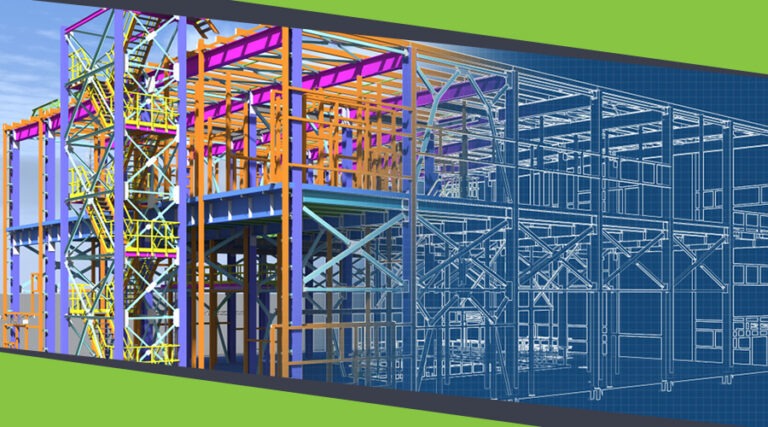
Our Structural Support Services can enhance your structural engineering projects with expert support.
Explore more
Uppteam delivers precise and reliable surveying and mapping solutions to help you make informed decisions.
Explore more
Whether you're working on residential, commercial, or industrial buildings..
Explore more
Uppteam’s Virtual Admin Support can help you with all your administrative tasks..
Explore more
Our experts work as your 3rd party quality control support partner.
Explore more
Sreela Biswas 
When it comes to high-stakes construction projects, vast budgets, strict schedules, and critical safety requirements are vital factors. This makes one thing certain: there is almost no margin for quality errors or communication gaps in such major projects.
In such settings, even a minor design or coordination setback can threaten budgets, schedules, and safety. Industry analysis reveals that high-stakes AEC projects rarely fail due to design skill alone. Rather, failures generally result from misalignments in documents or coordination gaps. Consequently, rework and last-minute changes become inevitable, draining substantial value from these projects. A white paper released in 2022 jointly by Autodesk and the FMI Corp confirmed that rework accounted for 5% of annual US construction spending, totaling more than $65 billion.
Without rigorous checking practices in place, errors in plans or models remain unrecognized until construction work begins. One must also keep in mind that US AEC projects are subject to stringent regulatory standards. However, meeting code is barely a baseline.
Independent quality control adds a shield beyond compliance, targeting the identification of defects long before they become crises.
In general, high-stakes projects entail high capital values, complicated systems, or critical public functions. An industry study reveals that 98% of high-stakes projects experience cost overruns of 30% or more. It further discovers that 77% of these projects are delivered at least 40% late. There is something vital and surprising that these numbers indicate. Essentially, they highlight how conventional checks mostly fail to deal with compounded design and coordination tasks.
One of the main concerns in high-stakes projects is rework. In most cases, it stems from design errors, conflicting documents, and field clashes. Remember that independent QC in the AEC workflow explicitly targets this risk before teams finalize drawings for procurement and construction.
Now that the scope of independent quality control for major AEC projects is established, it’s time to understand independent QC from the ground up.
Simply put, independent QC means that there is a separate technical team that reviews models and documents without owning the design. This team serves as an unbiased scrutineer with extensive technical knowledge and skills, and an established QC procedure is in place. This team never changes the design intent or assumes engineering authority. Instead, its main focus remains on coordination completeness.
So, essentially, independent QC services are offered by an independent third-party provider. This provider verifies alignment across architectural, structural, and MEP drawings, as well as BIM models. Keeping track of issues, such as model inconsistencies, any missing details, and documentation discrepancies, is also performed by the provider. These are the components that internal teams may neglect under pressure to meet the project schedule.
It is worth noting that independent QC by third-party providers depends on structured, checklist-driven procedures. Experienced and proficient reviewers authenticate that the drawings satisfy project specifications, codes, and final tolerances before proceeding with the submittals. External QC teams also blend BIM tools with digital markups to record each finding and recommendation. This approach proposes a repeatable review framework that delivers consistent outcomes across multiple high-stakes projects.
Multiple sources provide evidence that independent QC can measurably improve the outcomes of high-stakes projects. The main benefits comprise:
What is even more interesting here is that each of these advantages directly improves the outcome standard. Projects experience minimal change orders and back charges when issues are detected early. In high-stakes projects, even small defects can turn into critical failures. So, the ability to resolve them before permitting or construction is indeed transformative.
Numerous critical areas of a project are covered by independent QC, involving:
Together, these components establish a preemptive quality control paradigm. Instead of waiting for the inspector or contractor to catch errors in the field, independent QC roots quality in the design phase onward.
With every passing year, the AEC market is becoming increasingly complex. Currently, owners and builders demand both reliability and speed. The best thing about independent QC is that it delivers both with sheer precision. By incorporating a dedicated review stage, firms can streamline approvals and avoid construction delays. Research confirms that prioritizing quality control from the start of a high-stakes project enables clients to experience improved schedule conformity and cost predictability.
Furthermore, independent QC also supports the industry’s move toward digital and data-centric procedures. Taking advantage of BIM and collaboration tools, providers of independent QC services work in sync with design teams, ultimately preserving momentum.
The quality standard is specifically high in regulated sectors like aviation, healthcare, and utilities. Autonomous quality oversight is more and more written into contracts and codes for such high-stakes projects. For instance, federal guidelines clearly mandate the separation of QC from production roles to eradicate conflicts. Through the formalization of independent reviews, AEC firms demonstrate due diligence to authorities and stakeholders.
In the end, independent QC elevates the outcome standard by rooting thoroughness and accountability in the workflow. It turns possible errors into problems spotted early, eliminating expensive surprises.
Don’t make the mistake of thinking independent third-party QC is an extravagance. In fact, the AEC industry is standing at a point where it is a necessity for high-stakes, critical projects. For AEC firms operating in the US aiming for error-free, prompt delivery, this independent oversight is the distinction between satisfying expectations and surpassing them.
The Second Eye service from Uppteam delivers precisely this expert review layer. By integrating your team with niche US-based model auditors and clash-detection specialists, we guarantee that each detail is double-checked prior to permitting or construction.
Get in touch with Uppteam today to see how our unique Second Eye service can protect your upcoming project’s success.
Your One-Stop MEP Design Support Solution is Here
Hire Remote Team at an Affordable Price!