MEP Design Services
From Graduate to PE: Your Roadmap to Engineering Licensure in the U.S.
-
Sreela Biswas
- January 13, 2026
- 10:40 am

Complete Architectural Construction Document Production In Your Company Standards
Our degreed and trained architectural designers in India work as an extension of your staff on a monthly and hourly subscriptions.
Uppteam’s licensed expert MEP designers, operating remotely, collaborate with US AEC firms to deliver code-aligned MEP design solutions.
Offshore structural design experts deliver top-quality, code-compliant designs and documentation for US projects.
Seasoned civil designers remotely provide unmatched support for advancing site development, grading, and utility plans with sheer accuracy.
Cutting-edge 3D modeling and clash-coordinated documentation empower construction-ready
project delivery.
Dedicated offshore admin teams streamline architect, contractor, and engineering workflows.
Independent and guaranteed error-free model audits, clash detection, and construction
document verification by a specialized team.
U.S.-based local architectural representation, ensuring communication, accountability, and delivery expectations, managed close to the client.
Explore more
Discover our architectural design excellence through a curated selection of projects.
Explore more
Take a look at how Uppteam can elevate your projects with expert engineering solutions.
Explore more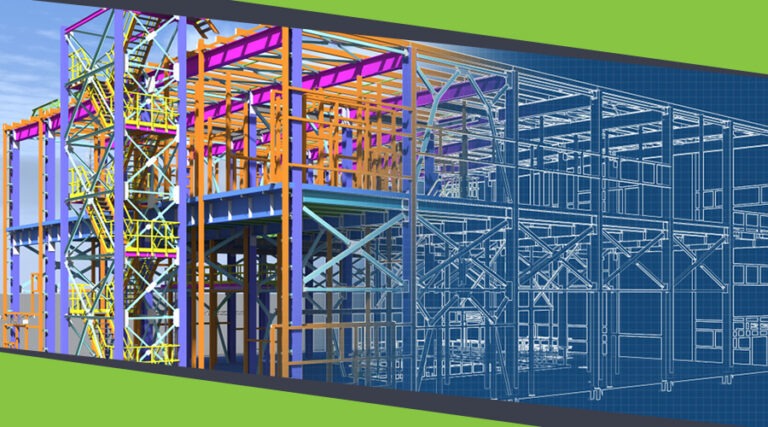
Our Structural Support Services can enhance your structural engineering projects with expert support.
Explore more
Uppteam delivers precise and reliable surveying and mapping solutions to help you make informed decisions.
Explore more
Whether you're working on residential, commercial, or industrial buildings..
Explore more
Uppteam’s Virtual Admin Support can help you with all your administrative tasks..
Explore more
Our experts work as your 3rd party quality control support partner.
Explore more
Sreela Biswas 
Every U.S. state mandates a professional engineer’s license for engineering practice. The main goal of licensure is to enforce established professional standards to safeguard public safety. A licensed engineer demonstrates proficiency through comprehensive education, progressive experience, and examinations.
In the U.S., getting a license usually calls for an ABET-accredited degree, along with around four years of on-site work experience. There is no alternative to fulfilling these prerequisites. Only then can a candidate attempt the NCEES Fundamentals of Engineering (FE) and Principles and Practice exams to earn the PE title. Note that these exams are currently offered year-round, following a computer-based format.
After acquiring the license, most states require continuing education to maintain the PE license. This renewal needs to be done every two years. NCEES says that earning a PE provides engineers with career mobility and opens new opportunities. This indeed reflects the license’s value, which transcends regulatory protocols.
Continuous growth is among the most important factors for the engineering professional. Without a doubt, the basis for PE licensure starts with education.
Generally, the licensing roadmap commences with an ABET-accredited bachelor’s degree in engineering. All engineering graduates must then take the FE examination. This test is actually a computer-based assessment of undergraduate fundamentals. Passing the FE exam results in registration as an Engineer-in-Training (EIT). Simultaneously, the engineers should also gain real-world work experience.
The majority of U.S. states need approximately four years of acceptable, progressive engineering work experience under a licensed PE. When this experience criterion is met, individuals apply for and undergo the PE examination in their discipline. A key aspect to mention here is that NCEES now administers both the FE and PE exams via Pearson VUE centers throughout the year.
For engineering graduates considering becoming licensed engineers, the FE exam fee is $225, plus state-specific additional licensing fees, and the PE exam fee is $400, with additional state-specific application fees ranging from $75 to $377.
The quest from a graduate to a licensed PE consists of clear stages. These phases involve:
If you are still unaware, let us inform you that several AEC firms support fresh graduates through these phases. The best companies seldom offer tuition reimbursement and mentorship to properly prepare for exams. In fact, this assistance eases preparation for licensure.
Candidates must always plan ahead. After passing the FE test, most engineers register as EITs. They usually hold this EIT status while they complete the required supervised work experience. However, one must apply to the respective state board in advance and get proof of work experience. Remember that every state has slightly different procedures, and yet grasping these steps and timelines is key to a hassle-free path to the PR credential.
Passing the PE exam is a major achievement, but a candidate must maintain a balance between their work and licensure goals. Besides, harmonizing project schedules with exam preparation can be a real struggle. Trust us, we know it! Successful candidates have no other choice but to integrate study time into their routines. Flexible schedules or remote work opportunities can eliminate commute time, providing engineers with additional hours to prepare effectively for the exam.
Many engineers seek help from their colleagues who have already passed the PE exam for study strategies and advice. Some firms offer paid study time or review courses to support a candidate’s professional development.
To succeed, every candidate must have an organized study plan. Additionally, there are the NCEES practice exams and study materials. These things are widely used, enabling candidates to simulate test conditions. These tactics, along with firm-supported tutoring or course sessions, help individuals consistently prepare for exams without disrupting their project work.
Let’s set something straight upfront: a licensed engineer is the only specialist permitted to prepare, sign, and seal official engineering plans. In the real world, this implies that a PE must authorize the design submitted to authorities and clients.
Many projects, particularly the public infrastructure ones and design-build contracts, demand only PE-certified drawings. Consequently, most firms expect licensed engineers. At present, an increasing number of employers need a PE credential for career growth. When you have licensed staff at your firm, they help strengthen the credibility and capacity of the firm to accept challenging projects.
Bear in mind that a PE license validates your expertise and gives you better professional authority. With this credential, one can work as a consultant, start one’s own engineering firm, and testify as an expert witness.
When a firm encourages licensure, it signals clients and regulatory bodies that the business always prefers expertise and quality. This extra credibility facilitates firms in winning larger-scale contracts that call for professional oversight. Eventually, investing in engineering licensure curtails risk and boosts project outcomes by incorporating higher standards and accountability in the design process.
The industry is at a pivotal moment when outsourcing enables firms to leverage global expertise and drive expansion while managing expenses. Realistically, remote teams can take care of routine drafting and modeling activities. This frees up staff for more complex design work.
Key services entail:
Undoubtedly, such remote AEC service providers act as staff multipliers for firms. When tasks like structural calculations, clash spotting, and permit drawing preparation are offloaded to a proficient partner, firms provide their engineers with the bandwidth to strive for licensure goals. Effectively, remote teams assist in assuring optimal project quality and on-time delivery. Concurrently, your local engineers can concentrate on passing exams and attaining the required field experience to become PEs.
With Uppteam’s top-drawer remote AEC support services, firms can get all these benefits. When our off-site design and BIM specialists look after structural drawings, MEP drafting, and compliance reviews, your in-house engineers get more time to fulfill their licensure goals. All in all, joining forces with Uppteam fosters your projects to be delivered effectively and offers your staff the time and focus needed to become expert PEs.
Your One-Stop MEP Design Support Solution is Here
Hire Remote Team at an Affordable Price!