Architectural Services
Catch Coordination Issues Before Construction Through Independent QC to Avoid Penalties
-
Sreela Biswas
- March 23, 2026
- 7:46 am

Complete Architectural Construction Document Production In Your Company Standards
Our degreed and trained architectural designers in India work as an extension of your staff on a monthly and hourly subscriptions.
Uppteam’s licensed expert MEP designers, operating remotely, collaborate with US AEC firms to deliver code-aligned MEP design solutions.
Offshore structural design experts deliver top-quality, code-compliant designs and documentation for US projects.
Seasoned civil designers remotely provide unmatched support for advancing site development, grading, and utility plans with sheer accuracy.
Cutting-edge 3D modeling and clash-coordinated documentation empower construction-ready
project delivery.
Dedicated offshore admin teams streamline architect, contractor, and engineering workflows.
Independent and guaranteed error-free model audits, clash detection, and construction
document verification by a specialized team.
U.S.-based local architectural representation, ensuring communication, accountability, and delivery expectations, managed close to the client.
Explore more
Discover our architectural design excellence through a curated selection of projects.
Explore more
Take a look at how Uppteam can elevate your projects with expert engineering solutions.
Explore more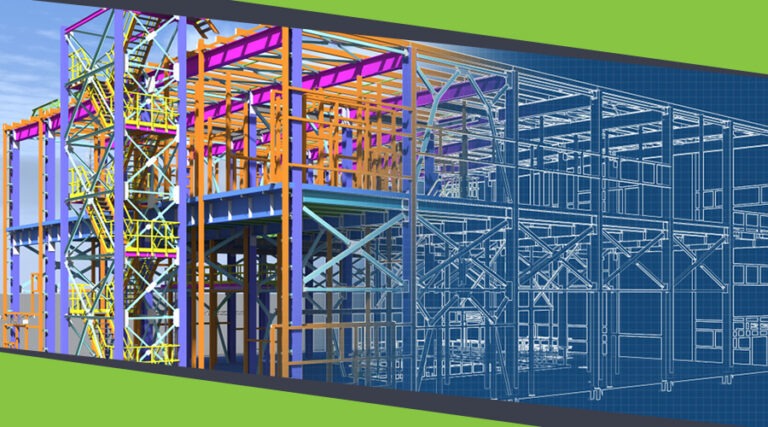
Our Structural Support Services can enhance your structural engineering projects with expert support.
Explore more
Uppteam delivers precise and reliable surveying and mapping solutions to help you make informed decisions.
Explore more
Whether you're working on residential, commercial, or industrial buildings..
Explore more
Uppteam’s Virtual Admin Support can help you with all your administrative tasks..
Explore more
Our experts work as your 3rd party quality control support partner.
Explore more
Sreela Biswas 
So, how much exactly do coordination gaps cost your AEC firm? Well, the real impact is far greater than most project teams think.
MEP routing conflicts, out-of-sync structural elements, and inconsistent CD packages silently cause field disasters. These problems emerge when construction is already underway, not before. And this timing is exactly where the financial detriment sets in. Independent quality control has immense potential to completely change that equation.
AEC businesses throughout the United States need to comprehend one simple truth. Detecting coordination challenges before the commencement of construction work is way cheaper than resolving them on-site. Independent QC reviews provide AEC firms with a crucial pre-construction safety net. This guide walks you through how independent quality control has the power to protect projects, timelines, and bottom lines to keep penalties at bay.
Failing to coordinate properly generates consequences that go beyond just budget overruns. Real-life examples and research confirm that rework costs average between 7% and 10% of overall construction expenditure. Such figures contain both direct on-site modifications and indirect schedule impacts. Even for a mid-scale construction project, those percentages demonstrate serious financial consequences.
Evidence also indicates that the absence of design-stage coordination is the main cause behind construction rework. Mistakes and omissions continually rank among the top rework drivers across project types. These findings corroborate a well-established industry pattern. Coordination gaps left unaddressed before construction mostly lead to compounding expenses and schedule exposure.
US-based AEC firms need to realize that construction penalties often stem from pre-construction documentation shortcomings. Permit comment cycles, backlogs in RFIs, and on-site change orders all bring detrimental financial outcomes in competitive contracts. Before laying the first brick on-site, executing an independent QC review is the most cost-effective shield against such penalty exposures.
Usually, internal design teams gain proficiency in their own work over time. This familiarity contributes to blind spots. An independent QC reviewer makes a big difference by approaching every model, drawing package, and coordination set with a fresh technical perspective. With the help of an independent review, AEC firms can consistently spot critical gaps that internal teams ignore during standard pre-submission checks.
The following deliverables are ensured through independent third-party QC review:
Essentially, these independent findings offer AEC firms a methodical issue log. This log establishes a clear, actionable path before permits go out and before contractors include conflict expenses in their bid pricing.
BIM model integrity signifies the trustworthiness of every downstream deliverable. We know that when an AEC firm submits federated models with unsettled clashes, facing permit delays and contractor confusion becomes inevitable. This is precisely where an independent model audit comes in handy. It reviews model health parameters, shared coordinate accuracy, workset organization, and cross-discipline alignment. Such a detailed audit layer safeguards the entire project team from technical failures.
Here, Navisworks Manage is an extremely useful tool that enables independent QC teams to perform hard and soft clash detection in all completed federated models. While hard clashes highlight geometric intersections between structural elements and MEP systems, soft clashes flag clearance breaches that hinder maintenance access and code compliance. Remember that both clash types bear notable cost implications when detected in the field, rather than before construction work initiation.
AEC firms that settle clashes before permit submission can evade the most costly RFI cycles. Even a single unfixed MEP clash can trigger numerous RFIs, trade coordination meetings, and on-site rework sequences. In this context, an independent clash detection review removes such domino effects. It also helps protect the schedule and preserve contractor relationships throughout a project.
The quality of the construction documentation decides the permit cycle duration. With misaligned or incomplete CD packages in place, AHJ review comments keep coming that delay approvals for multiple weeks. Before submission, an independent QC review of CD sets helps identify documentation errors. It is even more concerning that internal teams frequently miss these gaps under pressure to meet the timeline. Honestly, everyone misses something when they rush toward a submission date.
AEC businesses operating in the US require an independent review at these critical construction document milestones before AHJ submission:
AEC firms should be mindful of these document-level checks, as they help protect them from permit delays and contractor disputes that can lead to penalty exposure. Independent QC sets a verified, ready-for-construction document package that withstands both AHJ review and contractor scrutiny.
Construction contracts customarily include liquidated damages clauses tied to project milestones. AEC firms face liability risks when coordination gaps delay projects. When an independent QC review is prioritized before construction commences, firms gain documented evidence of pre-submission verification. This documentation shields AEC businesses from contract disputes and insurance claims linked to project performance.
Moreover, an independent review also facilitates strengthening each AHJ submission set. Permit reviewers respond on a positive note to well-coordinated, internally uniform documentation. Evidently, projects with minimal permit comments progress faster through approval cycles. This speed curtails the performance period and limits penalty exposure associated with milestone dates in project contracts.
For US-based AEC companies, it is essential to deal with independent QC as a tactical pre-construction investment. Don’t ever make the mistake of considering it a discretionary add-on. Also, bear in mind that a third-party review only costs a small share of on-site rework expenses. So, prevention always costs considerably less than correction at every project scale.
Coordination gaps hide in BIM models, CD sets, and cross-disciplinary interfaces until construction unmasks them at the worst possible time. This necessitates AEC firms to invest in independent QC prior to the initiation of on-site construction work. Only then can these firms protect their project schedules, contracts, and professional reputations.
Second eye services from Uppteam deliver superior independent third-party QC reviews that every AEC firm in the US needs. Our specialized team performs hard and soft clash detection, BIM model audits, CD package reviews, and cross-disciplinary coordination scrutiny, leveraging Navisworks Manage and Revit-based analysis.
Contact Uppteam today and start closing every coordination gap before it reaches the construction stage.
Your One-Stop MEP Design Support Solution is Here
Hire Remote Team at an Affordable Price!