Architectural Services
Why Production Capacity, Not Design Talent, Is the Real Growth Constraint for Firms
-
 Sreela Biswas
 - March 23, 2026
- 7:17 am

Complete Architectural Construction Document Production In Your Company Standards
Our degreed and trained architectural designers in India work as an extension of your staff on a monthly and hourly subscription.
Uppteam’s licensed expert MEP designers, operating remotely, collaborate with US AEC firms to deliver code-aligned MEP design solutions.
Offshore structural design experts deliver top-quality, code-compliant designs and documentation for US projects.
Seasoned civil designers remotely provide unmatched support for advancing site development, grading, and utility plans with sheer accuracy.
Cutting-edge 3D modeling and clash-coordinated documentation empower construction-ready
project delivery.
Dedicated offshore admin teams streamline architect, contractor, and engineering workflows.
Independent and guaranteed error-free model audits, clash detection, and construction
document verification by a specialized team.
U.S.-based local architectural representation, ensuring communication, accountability, and delivery expectations, managed close to the client.
Explore more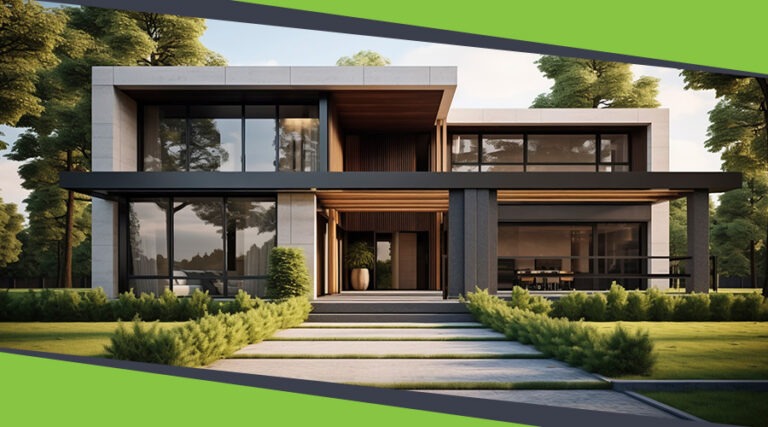
Discover our architectural design excellence through a curated selection of projects.
Explore more
Take a look at how Uppteam can elevate your projects with expert engineering solutions.
Explore more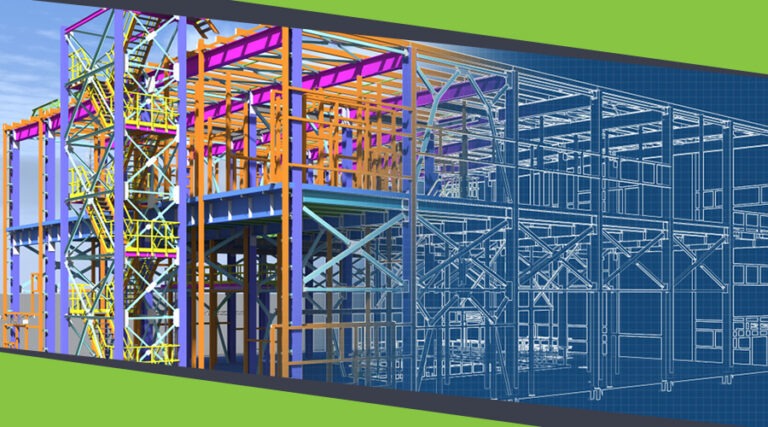
Our Structural Support Services can enhance your structural engineering projects with expert support.
Explore more
Uppteam delivers precise and reliable surveying and mapping solutions to help you make informed decisions.
Explore more
Whether you're working on residential, commercial, or industrial buildings..
Explore more
Uppteam’s Virtual Admin Support can help you with all your administrative tasks..
Explore more
Our experts work as your Second Eye Services expert.
Explore more Sreela Biswas
It is not that the US-based AEC firms today lack creative ideas or design talent. In fact, the actual struggle begins when complete drawing packages, coordination, and revisions multiply faster than the internal team can handle. Projects halt in production, backlogs grow, and billable work gets deferred even when the pipeline seems strong. In this provision, the main constraint is not design vision but production capacity.
Simultaneously, the wider construction ecosystem is coping with severe labor shortages and increasing delivery expectations. This means the US AEC sector will need thousands of additional workers in the coming years, just to keep up with demand. Be aware of this pressure flowing directly into architecture and engineering studios, where documentation and coordination tasks have become the barrier, not concept design.
Latest industry surveys reveal that talent and staffing challenges rank as the top concerns for AEC leaders in the US. Many firms have reported that workload backlogs continue to show strong demand. Still, billings and new design contracts have softened since teams are unable to convert opportunities into deliverables quickly enough. Simply put, demand prevails, but production bandwidth is not expanding at the same speed.
Architectural billings in the US have experienced extended periods below the growth threshold. Yet, at the same time, backlogs average over six months of work. This combination indicates that firms have several projects in their pipeline but are struggling to move them through documentation and permitting promptly. Delays in the coordination and drawing phases are seldom due to design skills and are more often because of depleted internal resources.
The construction and design spectrum is facing continuous labor shortages. Consequently, architectural production is heavily affected. The US AEC sector needs a large number of workers to meet surging demand. In the background, this gap is driving up wages and hiring competition. As a result, it is becoming harder for design firms to quickly expand their production workforce.
Labor market data also outlines a structurally rigid environment, with AEC unemployment hovering near historic lows. There is also a chance that many workers will exit or shift industries in the coming days. Subsequently, many architectural practices run lean, with small teams covering design, modeling, detailing, redlines, and coordination concurrently. It is critical to understand that when project loads increase, the restricting factor is not about finding design ideas but about finding enough qualified people to push models, sheets, and details on time.
For a large share of US AEC firms, production limitations emerge first as deferred starts of new projects. It has been observed that when internal teams are completely occupied, new work enters a secret queue long before the start of construction work. Backlog reports may look strong, but the actual barrier is the number of hours available for documentation and coordination each week.
These bottlenecks lead to some particular operational difficulties for firms:
Over time, this trend negatively impacts profitability and client satisfaction, even when the firm’s design reputation is strong enough. Increasing design durations, softening billings, and struggling to convert inquiries into signed contracts all stem from limited, inflexible production capacity.
AEC firms often try to resolve capacity challenges by adding local hires. However, this approach has structural limitations. Recruitment takes months in a tight labor market. By the time a new hire is fully productive, project demand may have changed. This leaves AEC businesses with extra fixed overhead and limited flexibility.
Furthermore, a lot of firm leaders now consider talent acquisition and retention to be their foremost tactical priority, surpassing even financial uncertainty. Architectural and engineering backlogs are still robust in several segments, but AEC leaders anticipate slower growth if staffing cannot keep pace. Dependence on a fixed headcount means capacity increases more slowly than project demand. This is precisely what converts production into a growth cap.
Undoubtedly, architectural outsourcing and remote AEC teams have revolutionized from basic drafting assistance to integrated production partners. Well-organized offshore production models now enable US-based AEC firms to turn fixed expenses into variable capacity linked directly to project workload. By allocating drafting, BIM modeling, detailing, and documentation tasks to dedicated offshore teams, architectural practices can retain design leadership in-house while significantly boosting their production capacity.
Industry-verified sources underscore the following benefits that explicitly address the capacity constraint:
In reality, this framework frees time for US teams to emphasize concept development, client communication, and high-stakes design choices while offshore providers tackle the documentation engine for every project. For most of the AEC firms, this is the distinction between turning away work and accepting larger-scale projects with confidence.
These days, the AEC spectrum demands harmony between flexibility, resilience, and cost control. Reports show that firms are dealing with softer billings in some segments while still having strong pipelines and long backlogs. In light of this, strategies that expand production bandwidth without adding permanent overhead are particularly valuable.
Offshore architectural production models are formulated to sit precisely at this intersection of requirements. By developing a niche but scalable production extension that fathoms US standards, AEC businesses can transform capacity from a fixed ceiling into a controllable lever. This transition enables AEC leadership to treat production capacity as a core competency rather than a severe constraint on growth.
For AEC organizations operating in the US, the biggest challenge in 2026 is not design talent anymore; it is the ability to deliver construction-ready documentation at scale, on schedule, and at a predictable cost. Firms treating capacity as a tactical lever instead of a fixed barrier are better able to stabilize cash flow and sustain client confidence in a volatile environment.
In this context, architectural offshore production services from Uppteam come as a rescuer, giving AEC firms a pragmatic path to elevate production capacity without diluting design control or adding more permanent staff. By blending US-licensed leadership with dedicated offshore teams, our AOP model helps with construction documents, BIM, and detailing. At the same time, we also ensure perfect alignment with US codes and project-specific workflows.
If your firm is seeking to turn capacity from a challenge into a competitive edge, partner with Uppteam now, a focused AOP provider to convert strong demand into profitable, sustainable growth.
Your One-Stop MEP Design Support Solution is Here
Hire Remote Team at an Affordable Price!