Structural Design Support
Why Some Structural Design Lasts Forever While Other Projects Fall
-
 Sreela Biswas
 - October 3, 2025
- 8:09 am


U.S.-based local architectural representation, ensuring communication, accountability, and delivery expectations, managed close to the client.
Explore more
Discover our architectural design excellence through a curated selection of projects.
Explore more
Take a look at how Uppteam can elevate your projects with expert engineering solutions.
Explore more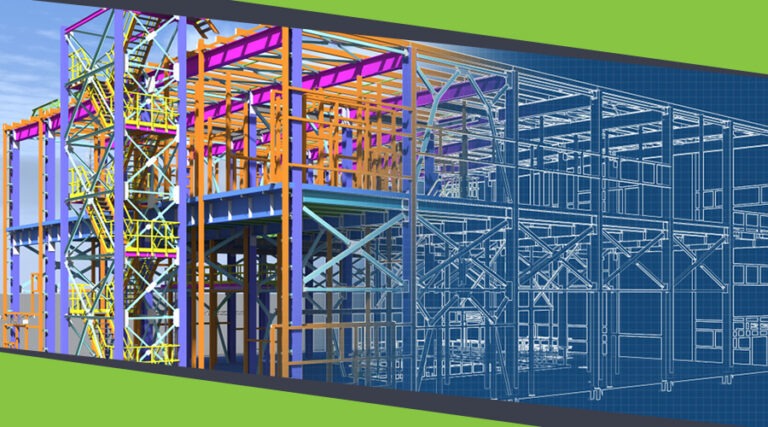
Our Structural Support Services can enhance your structural engineering projects with expert support.
Explore more
Uppteam delivers precise and reliable surveying and mapping solutions to help you make informed decisions.
Explore more
Whether you're working on residential, commercial, or industrial buildings..
Explore more
Uppteam’s Virtual Admin Support can help you with all your administrative tasks..
Explore more
Our experts work as your Second Eye Services expert.
Explore more Sreela Biswas
Consider the Mackinac Bridge in Michigan, built in 1957; it still carries thousands of vehicles daily across brutal weather conditions. Compare that to highway overpasses from the 1980s that already need significant repairs. The difference isn’t just age or materials, though both play a role.
The honest answer lies in how structural engineers tackle the fundamental challenges of building something meant to last decades. After examining projects ranging from subway systems to international airports, several key principles emerge that separate successful infrastructure from projects that struggle.
Load calculations seem straightforward until you examine the details. Everyone knows a bridge must carry traffic. But how do you account for that January ice storm adding 30% more weight than worst-case scenarios? Or the reality that trucks keep getting heavier despite regulations?
Engineers working on Denver International Airport’s terminal had to account not just for normal passenger loads but also for mass flight cancellations, where thousands might be stranded for hours. Layer on ground vibrations from aircraft, wind loads on that massive roof, and thermal expansion across hundreds of feet. Each factor alone is manageable. Together, they make “simple” load calculations anything but.
Safety margins in these projects can be surprising. Highway bridges are often designed for loads 2-3 times heavier than typical traffic suggests. That might look like waste, but it’s actually what keeps structures functional when reality exceeds expectations.
Redundancy takes this thinking further. Smart infrastructure doesn’t assume that every component will stay perfect forever. Cable-stayed bridges exemplify this – lose one cable, and the others automatically redistribute the load. It’s an elegant problem-solving based on the acceptance that material fatigue and unexpected stresses occur.
Resilience has become critical as weather patterns grow less predictable. Strong structures resist disaster, but resilient ones recover quickly. The difference between reopening a highway in days versus months can determine whether communities bounce back or face prolonged economic damage.

Japan’s earthquake-resistant bridge design offers compelling lessons. Rather than building stiffer, “stronger” structures, Japanese engineers embraced flexibility. Their bridges sway and shift during seismic events, then return to their original position. Results speak volumes – flexible designs survive while rigid ones suffer catastrophic failure.
Airport terminals present different challenges entirely. Atlanta’s Hartsfield-Jackson handles over 100 million passengers annually. The structural engineering quietly manages incredible complexity: terminal roofs spanning hundreds of feet, floors enduring constant aircraft vibration, and climate control across enormous volumes. Solutions typically blend materials, such as steel for flexibility, concrete for stability, and composites where weight reduction is most critical.
The Øresund Bridge, connecting Denmark and Sweden, faced an unusually demanding set of constraints:
The final bridge-tunnel combination resolved all of them, a clear demonstration that creative engineering and structural fundamentals are not at odds.
Meanwhile, hurricane-prone regions, such as the Gulf Coast, have developed their own specialized approaches. The I-10 Twin Span Bridge replacement after Hurricane Katrina incorporated lessons learned the hard way. Precast concrete segments were designed to withstand 150+ mph winds, and foundation systems were driven 200+ feet deep into soft delta soils. Cost overruns were significant, but the alternative, losing critical transportation links for months after every major storm, proved far more expensive.
Today’s materials aren’t what engineers used 40 years ago. Advances in chemistry and manufacturing are redefining possibilities:
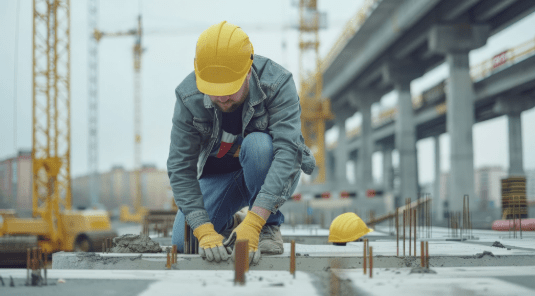 How BIM, FEA, and AI Are Transforming Structural Design
Building Information Modeling (BIM) brings architectural, structural, and mechanical systems into a shared digital environment, where changes in one system are immediately visible across all disciplines. Fewer construction surprises, fewer costly field conflicts.
Finite Element Analysis pushes simulation capabilities to new levels. Instead of testing one or two scenarios, engineers evaluate thousands: different load combinations, stress concentrations at specific connections, long-term fatigue patterns, even failure modes. Results aren’t just stronger designs, but smarter ones.
Real power comes from timing. Identifying weak points and testing alternatives early allows for changes when they’re still inexpensive – before concrete pours or steel fabrication begins.
Artificial intelligence is starting to influence structural optimization. Machine learning algorithms can now evaluate millions of design variations to find optimal configurations that human engineers might never consider. The Heatherwick Studio’s design for the new Google headquarters used AI-assisted structural optimization to create column-free spaces spanning over 200 feet. A few years ago, reaching the same result would have required months of manual iteration.
Large infrastructure projects rarely go smoothly. Timelines compress, complexity grows, internal teams stretch beyond limits. Risk isn’t just burnout – it’s errors rippling across entire projects.
Many firms turn to specialized design support during critical phases of their operations. uppteam collaborates with structural engineering teams, providing additional modeling capacity when workloads spike, detailed simulations to reduce rework, and documentation support to streamline construction handoffs.
uppteam’s approach extends rather than replaces expertise, giving core teams bandwidth for innovation and leadership while ensuring design details remain accurate and construction-ready.

Infrastructure represents society’s longest-term investments. Done right, structures serve generations. Done poorly, they drain resources for decades.
Today’s combination of proven principles, advanced materials, and powerful digital tools creates opportunities that simply didn’t exist a generation ago, and they arrive at precisely the moment climate change is raising the bar on what infrastructure must withstand.
The next decade will see deeper integration of IoT sensors for real-time monitoring and predictive maintenance. Bridges equipped with fiber optic strain sensors can already alert operators to potential problems years before they become visible. That shift, from reactive repair to predictive management, is exactly what aging infrastructure needs as replacement costs continue to climb.