Architectural Services
Standardization vs. Customization in Architectural Documents: Where Firms Save Time
-
Sreela Biswas
- April 8, 2026
- 6:49 am

U.S.-based local architectural representation, ensuring communication, accountability, and delivery expectations, managed close to the client.
Explore more
Discover our architectural design excellence through a curated selection of projects.
Explore more
Take a look at how Uppteam can elevate your projects with expert engineering solutions.
Explore more
Our Structural Support Services can enhance your structural engineering projects with expert support.
Explore more
Uppteam delivers precise and reliable surveying and mapping solutions to help you make informed decisions.
Explore more
Whether you're working on residential, commercial, or industrial buildings..
Explore more
Uppteam’s Virtual Admin Support can help you with all your administrative tasks..
Explore more
Our experts work as your 3rd party quality control support partner.
Explore more
Sreela Biswas 
Here is a question most AEC principals regularly face: how much documentation really needs rebuilding from the start in each project? In the US, firms are losing billable hours redeveloping standard details and rebuilding past Revit templates.
Rework costs are known to account for up to 14% of project budgets across the AEC sector. A significant share of them can be traced to inefficient documentation that could have been prevented with smarter workflows.
Grasping where standardization in architectural documents can save real time is indispensable for these AEC businesses. Knowing when customization is non-negotiable is just as important. Collaboratively, these insights provide firms with a quantifiable benefit on every deadline. AEC firms that can master this balance can confidently take on more projects without correspondingly adding headcount.
Many think that standardization in architectural documents reduces design quality. That is simply not true. What actually happens is that it removes repetitive decisions that each team has to rebuild from scratch in every project. Standardized Revit templates, title blocks, and notation conventions support consistent production workflows firm-wide. In the presence of these standards, production teams redirect their focus to actual design work.
BIM is currently standard practice in almost all AEC firms across the US. This growing adoption rate creates a direct opportunity to leverage reusable Revit family libraries and standard details. When AEC firms reutilize standardized data, they gain tangible benefits. In contrast, recreating the same content from project to project wastes significant time and leads to inconsistent drawings.
Real-life examples and research both confirm that firms having appropriate efficiency systems consistently elevate performance by 15-20% within the first year. Standard details anchor architectural documents and expedite plan check reviews. Bear in mind that reviewers always expect consistent notation, code references, and drawing coherence from submitted packages. Automation tools, such as Dynamo scripts, further expedite sheet management and firm-wide model health scrutiny.
It is vital for AEC businesses to understand that standardization yields the greatest benefits for repeatable, high-volume project types. Restaurant fit-outs, tenant improvements, and multifamily housing all reap benefits from preconfigured document frameworks. Therefore, investing in reusable standard documentation frameworks ultimately helps firms deliver more projects each year. These project types are exactly where production speed explicitly demonstrates firm profitability.
The following are the documentation areas where standard details and templates invariably save the most time:
Every single one of these components denotes the time firms can reinvest in design quality and client service.
Not every project suits a standardized documentation framework. This means AEC firms should plan for this explicitly. Healthcare facilities call for documentation bespoke to clinical workflows, FGI Guidelines, and HIPAA compliance standards. No standard detail library entails the accurate lead shielding requirements of a surgical suite or X-ray room. Forcing these programs into a standard template can generate more rework than it saves.
On the contrary, hospitality projects with exclusive brand guidelines need tailored documentation for each deliverable. Historic preservation work is subject to jurisdiction-specific specifications that vary across US states. Complex mixed-use sites with uncommon structural configurations mandate custom civil and coordination details. Additionally, inconsistent building codes in different jurisdictions further complicate standardized documentation for multi-market AEC organizations. Companies operating in several states encounter variable code editions and distinct permit submission formats.
It must be noted that custom documentation resonates with genuine project complexity and seasoned technical expertise. This compels AEC firms to build workflows that can recognize when customization is an explicit project requirement. The secret here is differentiating between complexity that needs customization and habits that create it needlessly. That differentiation separates efficient AEC businesses from those stuck rebuilding documentation in each project without reason.
Know for a fact that the most productive US AEC firms do not choose between standardization and customization. In fact, they structure their workflows to employ both techniques at once and deliberately. Here, the governing principle is straightforward: standardize the foundation and customize just what every project genuinely requires.
This implies upholding firm-wide Revit templates and coordinated drawing protocols as a production benchmark. Next, the project team applies custom documentation layers on top for site-specific conditions and client standards. This stratified approach guarantees production efficiency while conserving flexibility for complex project programs.
More importantly, this hybrid model evades two failure modes that generally affect AEC documentation workflows. The first is known as over-standardization. It basically means forcing complex project types into templates that just do not fit. As a matter of fact, over-standardization results in RFIs, permit modifications, and frustrates contractors in the field.
The second failure mode is under-standardization, where each project begins from scratch. Evidently, under-standardization depletes production capacity and causes inconsistent drawing quality throughout the firm.
Those firms that have already invested in digital tools for project delivery report productivity improvements of around 30%. Project timeframes also improve by approximately 20% when standardized workflows substitute manual documentation setups.
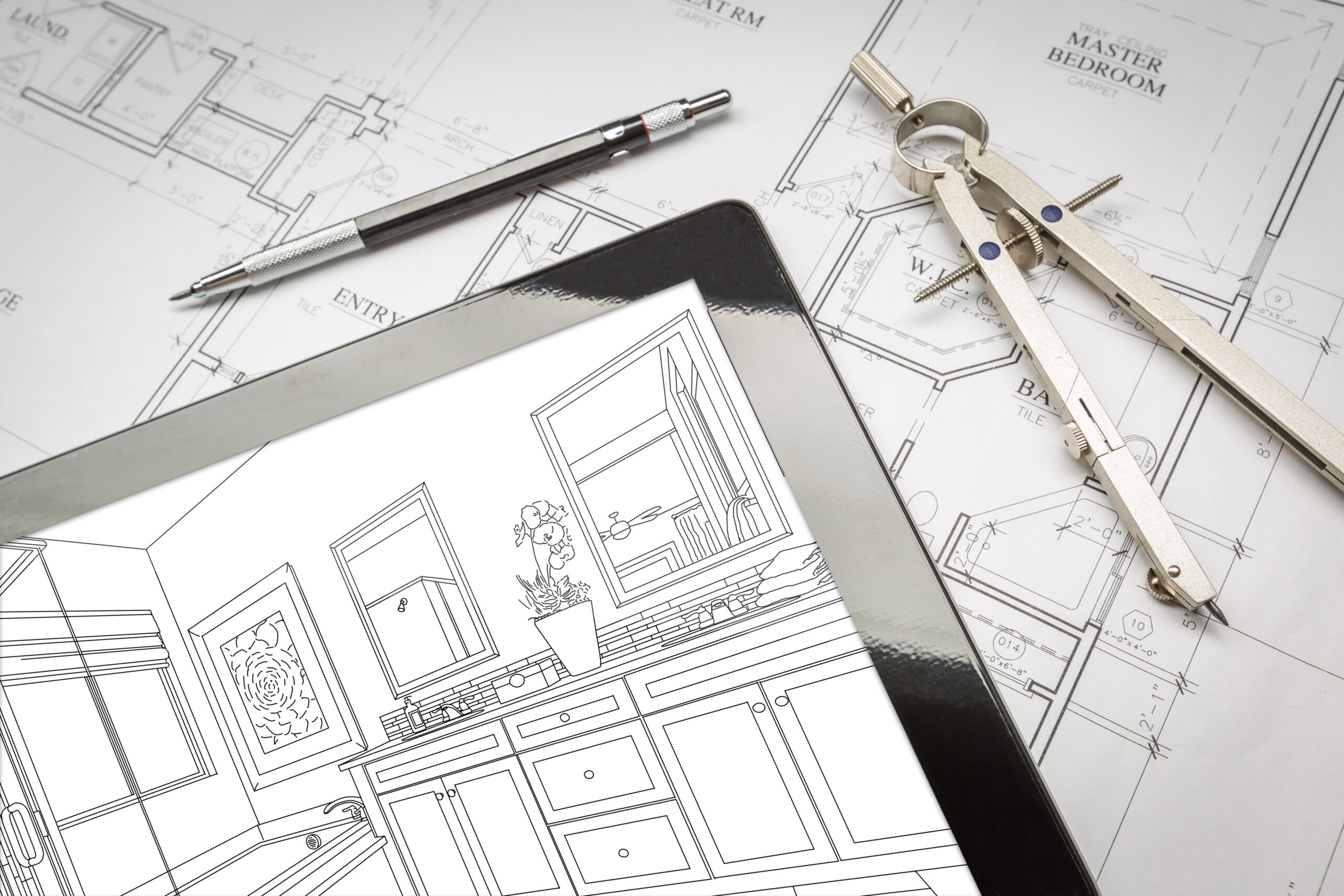
Establishing a practicable hybrid documentation strategy necessitates deliberate process design at the firm level. AEC firms need to understand that the aim is not to remove customization completely. Instead, the target is to restrict customization to areas where it actually adds project value.
Find what an efficient hybrid documentation should look like in reality below:
So, implementing this framework gives AEC firms the power to reduce rework and pass permit checks quickly. They can scale project delivery more efficiently without expanding production overhead in every engagement.
The above revelation shows that standardization and customization in architectural documents are not opposing strategies. They are complementary tools that, when incorporated correctly, define a high-performing firm. AEC businesses standardizing their repeatable documentation foundation gain consistency, speed, and cleaner permit submissions. Moreover, firms that understand when customization is really needed can protect both project quality and client trust.
Uppteam works directly with US AEC businesses to provide precisely this kind of balance. Our architectural offshore production service supports the development of comprehensive, phase-based CD packages aligned with each firm’s specific Revit standards. The CD production and BIM services teams handle both template-based and complex, custom documentation at scale.
If your AEC business is ready to grow project volume without sacrificing delivery quality, Uppteam is the partner you should collaborate with today.