All About A/E Staff
Protecting Construction Design Integrity in Multi-Vendor Projects
-
 Sreela Biswas
 - December 25, 2025
- 1:39 pm

Complete Architectural Construction Document Production In Your Company Standards
Our degreed and trained architectural designers in India work as an extension of your staff on a monthly and hourly subscription.
Uppteam’s licensed expert MEP designers, operating remotely, collaborate with US AEC firms to deliver code-aligned MEP design solutions.
Offshore structural design experts deliver top-quality, code-compliant designs and documentation for US projects.
Seasoned civil designers remotely provide unmatched support for advancing site development, grading, and utility plans with sheer accuracy.
Cutting-edge 3D modeling and clash-coordinated documentation empower construction-ready
project delivery.
Dedicated offshore admin teams streamline architect, contractor, and engineering workflows.
Independent and guaranteed error-free model audits, clash detection, and construction
document verification by a specialized team.
U.S.-based local architectural representation, ensuring communication, accountability, and delivery expectations, managed close to the client.
Explore more
Discover our architectural design excellence through a curated selection of projects.
Explore more
Take a look at how Uppteam can elevate your projects with expert engineering solutions.
Explore more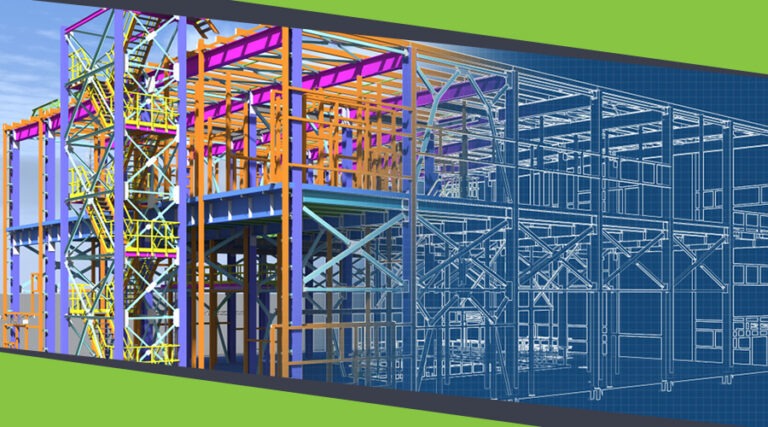
Our Structural Support Services can enhance your structural engineering projects with expert support.
Explore more
Uppteam delivers precise and reliable surveying and mapping solutions to help you make informed decisions.
Explore more
Whether you're working on residential, commercial, or industrial buildings..
Explore more
Uppteam’s Virtual Admin Support can help you with all your administrative tasks..
Explore more
Our experts work as your Second Eye Services expert.
Explore more Sreela Biswas
In the vibrant spectrum of the U.S. AEC sector, contemporary projects seldom pose puzzles in which several vendors hold the pieces. Though this specialization steers innovation, it also exposes a crucial vulnerability: the fragmentation of safeguarding construction design integrity in projects involving numerous vendors.
Since architectural firms partner with niche engineering consultants and contractors, the danger of design errors increases exponentially. Information loss during software interoperability can quietly undermine the original design intent.
Moreover, without a coherent strategy, the “single source of truth” can break into disconnected silos. It mandates a holistic approach to make sure that the final built asset flawlessly reflects the architect’s vision.
For AEC firms, having a good grasp of these dynamics is more than just quality control. It actually preserves firms’ reputation in an ever-evolving competitive market.
The workflow fragmentation throughout different specialized vendors establishes a fertile ground for inconsistencies, threatening project success. Suppose that when architectural teams in New York partner with structural engineers in Chicago and MEP consultants elsewhere, they seldom use distinct software ecosystems.
Research indicates that transferring information between platforms can lead to geometry loss or metadata breaches. This interoperability gap is the main antagonist in safeguarding construction design integrity in multi-vendor projects. As a result, design teams work long hours to rebuild models rather than refine them. The result of this is expensive delays and budget overruns.
Furthermore, the sheer volume of vendor-specific submittals also overwhelms standard review procedures. Consequently, minor deviations compile into significant errors. Construction design management demands that stakeholders thoroughly cross-check detailed plans against the main intent to avoid such misalignments. If these preliminary inconsistencies are not spotted early, they turn into on-site clashes that need high-cost rework. This entire situation further erodes the design’s integrity.
So, AEC firms need to understand that fragmentation is beyond just a logistical challenge. Essentially, it is a direct threat to the aesthetic and structural fidelity of their developments. Getting rid of these calls for more than just initiatives; it actually needs an organized, technology-centric intervention.
To handle the chaos created by decentralized workflows, a robust BIM execution plan should be in place. It would serve as the project’s constitution. This document is key to defining precisely how information reaches stakeholders, guaranteeing that maintaining design integrity remains a priority throughout the project.
A holistic BEP demonstrates particular protocols for model quality, data transfer norms, and file naming conventions. They help eliminate the effect of “loss in translation,” which is common in multi-vendor environments. By making conformance to these standards compulsory, AEC firms can create a coordinated environment in which all vendors use the same technical language.
Clarifying Industry Foundation Classes versions guarantees that models from distinct software suites maintain their geometric precision and data richness during transfer.
The BEP should clearly state which vendor is accountable for particular model components. This removes gaps in ownership that frequently lead to neglected design details.
Setting rigid timelines for merging vendor models into a master file enables frequent clash identification and design authentication cycles. Accordingly, the project remains aligned with the original version.
Incorporating strict versioning norms assures that all teams are operating on the most recent iteration. This averts the risk of construction on the basis of obsolete drawings.
Clearly outlining the needed detail level for every project phase prevents vendors from over- or under-modeling.
Other than the preliminary plan, the daily management of design integrity depends extensively on where the information resides and how it is accessed. Here, a Centralized Data Environment serves as the pillar of safeguarding the design integrity. It delivers a single repository for all project data.
Rather than depending on misaligned email threads or FTP sites, a CDE confirms that each stakeholder accesses the same data instantly. This centralization is indispensable, as different vendors seldom utilize different approaches, resulting in compatibility issues and integration gaps without a unifying platform.
More interestingly, when a manufacturing procedure or design component is managed by a single entity, integration becomes organized. Nevertheless, in a multi-vendor context, a CDE artificially restores that seamlessness. It enables instant feedback loops, allowing architects to view MEP engineers’ updates as they are released.
Modern innovative platforms incorporate business intelligence tools, such as Power BI, to visualize performance patterns. This offers project managers an all-inclusive dashboard of the project’s health. This degree of transparency imposes responsibility since any deviation from the design standard is instantly visible to the entire project team. By embedding the project in a CDE, an AEC firm can efficiently dismantle the silos that usually harbor errors. The purpose is to ensure that the collective outcome matches the design intent.
Although internal reviews are standard practice, the complexity of multi-vendor projects often mandates an objective external layer of examination. 3rd-party QA serves as an unbiased auditor committed to shielding construction design integrity. These professionals are not influenced by schedule pressures or vendor relationships. Their sole focus always remains on spotting systemic problems that internal teams overlook. This level of oversight is especially critical when handling vendors who may have diverse internal quality benchmarks not aligned with the project’s overall requirements.
The last fortress for upholding design integrity revolves around legal frameworks governing vendor relationships. AEC firms must understand that contracts should be developed not just to define the scope, but also to legally bind partners to the protection of design integrity in multi-vendor projects.
If there are ambiguities in contracts associated with design ownership and quality standards, they become the main causes of disputes. A contract having clearly defined roles and performance criteria is pivotal to holding vendors accountable when their work jeopardizes design integrity. These documents should clearly specify that the preservation of the design intent is a crucial deliverable and cannot be compromised at any cost.
Moreover, these agreements ought to deal with the granular details of data ownership and intellectual property rights. When a vendor changes a design aspect to favor its manufacturing procedure, the contract should command the approval workflow needed to legitimize that modification. In the absence of these legal constraints, vendors may make unilateral choices that streamline their work but derail the project’s ultimate vision.
It is also essential to incorporate particular clauses related to BIM standards and data fidelity. This makes the BEP a legal document and not just a guide. When AEC firms make design integrity a formal requirement, they ensure that each vendor is aware that limiting deviations is compulsory.
So, conserving the sanctity of a design in a disconnected, multi-vendor environment is unquestionably among the most vital challenges for modern U.S. AEC businesses. It calls for a multifaceted tactic that combines robust planning, cutting-edge technology, and lawful quality standards to succeed.
For AEC businesses in the U.S. handling these complexities, Uppteam comes with dedicated support that fills the gap between design and execution. Our 3rd-party QC services deliver the objective monitoring required to uphold rigorous standards across all vendors. In addition, our architectural design and BIM support teams make sure that your digital models are always consistent and coordinated.
Your One-Stop MEP Design Support Solution is Here
Hire Remote Team at an Affordable Price!