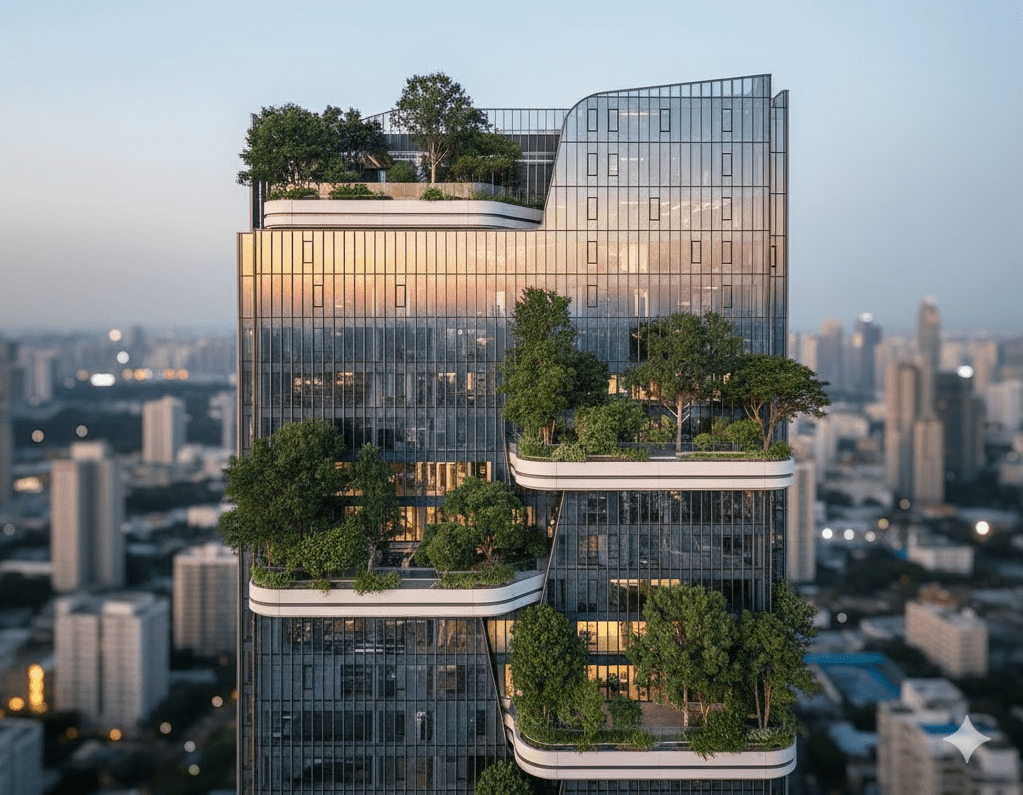
Well, modern architecture is not just about style anymore. It has reached a phase where purpose, efficiency, and fulfilling new expectations of contemporary building owners have become more critical than ever. From wellness standards to sustainability mandates, each trend influences how buildings perform and feel.
For U.S.-based architectural firms, going with the current flow doesn’t mean just following architecture trends but incorporating them into design workflows that foster real outcomes. It’s no secret that AEC businesses face stricter codes, higher expenditures, and increased environmental concerns. As a result, having remote support services and comprehensive BIM workflows has become a strategic advantage.
Sustainable Design Integration and Net-Zero Solutions
If there is one aspect that dominates current architectural discussions, it is net-zero energy buildings. Builders across the globe are extensively talking about it and have already made it a priority for new constructions. By 2034, this market is projected to reach $270 billion.
The best part of net-zero buildings is that they can generate as much renewable energy as they use. The incorporation of advanced solar systems, energy-conscious HVAC technologies, and smart building automation is the primary driver behind this. Do you know which region is pioneering this adoption? It’s North America, with a 40% global market share.
Beyond saving energy, sustainable architecture trends focuses on utilizing eco-friendly materials, minimizing waste, and preserving the environment. Bio-based insulation, cross-laminated timber, and recycled materials are becoming increasingly common in current projects. These materials are capable of curtailing carbon emissions. At the same time, structural integrity and aesthetic appeal are also maintained.
The advantages of incorporating sustainable design entail:
- Reduced operational expenditures through energy efficiency optimization
- Improved property values and stronger marketability
- Better occupancy health and productivity outcomes
- Adherence to changing building codes and certification criteria
- Access to tax benefits and other government incentives for green construction
Smart Building Technology and the Incorporation of IoT
Another emerging trend in building design context is smart building systems. These systems use AI, IoT sensors, and cloud platforms to boost performance. These leading technologies also facilitate live monitoring of energy use, temperature, air quality, and occupancy behavior. Besides, predictive maintenance features diminish equipment failure risks. As a result, system lifespans extend, and operational disruptions decrease.
Integrating the Internet of Things provides quantifiable benefits across several building systems. Cutting-edge HVAC controls can adjust cooling and heating in line with occupancy data and weather conditions. This significantly lowers energy usage. Moreover, lighting systems come with automatic-adjusting features that consider daylight levels and user preferences. The objective is to create comfortable environments and reduce electricity consumption.
Accordingly, innovative technology applications comprise:
- Automated energy management for lowering utility expenses
- Predictive maintenance for eliminating expensive equipment failures
- Better security through AI-driven surveillance systems
- Enhance the comfort of occupants through customized environmental controls
- Facility optimization through data-based decision-making
Human-Centric Architecture and Biophilic Design
In construction, biophilic design relates to the practice of integrating natural elements into the built environment. The purpose of this initiative is to connect occupants with the natural world, with a vision of promoting physical health, mental wellness, and enhanced productivity.
Biophilic design principles prioritize the basic human connection to nature. Research indicates that this type of design can minimize stress, boost cognitive function, and enhance productivity to a considerable extent. Implementing biophilic design can expedite recovery times in healthcare facilities while significantly reducing the need for pain medication.
Incorporating natural materials, improved daylight accessibility, and indoor vegetation can lead to spaces that foster both psychological and physical well-being. Additionally, natural ventilation systems, water features, and views of outdoor landscapes further boost the human-nature connection within architectural paradigms. These design techniques ensure fulfilling sustainability objectives. They also support the development of unique, marketable spaces that command premium pricing.
When it comes to implementation strategies, natural materials, such as stone and wood, should be used, along with optimizing window positioning to allow sufficient daylight. Indoor plants, green walls, and outdoor garden spaces should also be integrated. Designers should favor the use of natural colors and textures to create a peaceful and organic atmosphere.
Modular Construction and Prefabrication Innovation
With accelerated build times, consistent standards, and lowered expenses, modular construction is setting a new standard for contemporary project delivery. Recent studies reveal that the global modular construction market will reach the $160 billion mark by the end of 2030.
Evidence also suggests that off-site fabrication can reduce construction time by approximately 30-50%, compared to conventional methods. This is the main reason behind the modular construction market reaching great heights. It is essential to understand that factory-controlled settings foster superior quality management while reducing material waste and minimizing field disruptions.
Innovative modular systems integrate MEP elements during off-site fabrication. The outcome of this is a narrowing of field labor requirements and safety hazards. Plus, there are smart home technologies that seamlessly integrate into modular designs, creating energy-conscious, technologically advanced living and working spaces. Evidently, these systems aid scalable development projects while supporting architectural trends flexibility and design optimization options.
Adaptive Reuse and Circular Economy Standards
Adaptive reuse is also gaining prominence for its ability to transform underutilized infrastructures into functional, modern spaces. It encourages the preservation of architectural heritage and the reduction of environmental impact. Besides, this approach ensures a lessening of construction carbon emissions by up to 50-75% as opposed to new construction. It also salvages up to 90% of prevailing materials from feasible landfill disposal.
There is something more beneficial in terms of urban revitalization using adaptive reuse. It helps local economies and develops exclusive spaces that attract businesses and residents.
Structural evaluation, code adherence assessment, and creative design solutions that honor the original architecture are critical to the success of adaptive reuse projects. However, there is no compromise on meeting contemporary needs. In this provision, economic benefits comprise decreased construction expenditures, shorter project timeframes, and access to historic conservation tax incentives. These projects create unique spaces with character and history that distinguish them from standard new construction offerings.
Conclusion
Sustainability, adaptive reuse, biophilic wellness, smart systems, and AI workflows are among the contemporary trends in building design. They are extensively shaping the expectations of operators, clients, and regulators. For architectural firms in the U.S., nurturing these trends is not only advantageous but also essential. It is essential for success in competitive markets.
Uppteam’s remote architectural design services allow architectural firms to take advantage of these revolutionary design trends; plus, there is no need to expand internal resources. Our expert team delivers robust support for sustainable design integration, BIM modeling for complex geometries, and MEP system optimization for smart building technologies.
Through tactical collaboration with Uppteam, your architectural firm gains access to specialized expertise in modern design trends. While it enables your firm to deliver cutting-edge solutions that align with changing client needs, it also ensures competitive positioning in dynamic markets.
Sreela Biswas