Civil
How Strategic Civil Design Helps Minimize Risk Beyond Compliance
-
Sreela Biswas
- January 5, 2026
- 7:30 am

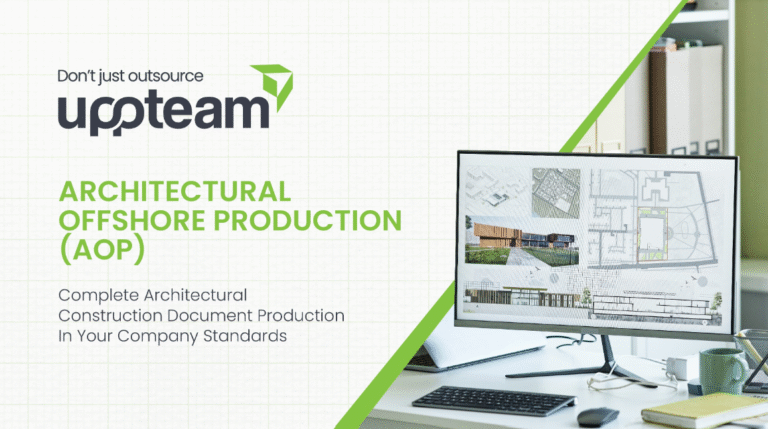
Complete Architectural Construction Document Production In Your Company Standards
Our degreed and trained architectural designers in India work as an extension of your staff on a monthly and hourly subscriptions.
Uppteam’s licensed expert MEP designers, operating remotely, collaborate with US AEC firms to deliver code-aligned MEP design solutions.
Offshore structural design experts deliver top-quality, code-compliant designs and documentation for US projects.
Seasoned civil designers remotely provide unmatched support for advancing site development, grading, and utility plans with sheer accuracy.
Cutting-edge 3D modeling and clash-coordinated documentation empower construction-ready
project delivery.
Dedicated offshore admin teams streamline architect, contractor, and engineering workflows.
Independent and guaranteed error-free model audits, clash detection, and construction
document verification by a specialized team.
U.S.-based local architectural representation, ensuring communication, accountability, and delivery expectations, managed close to the client.
Explore more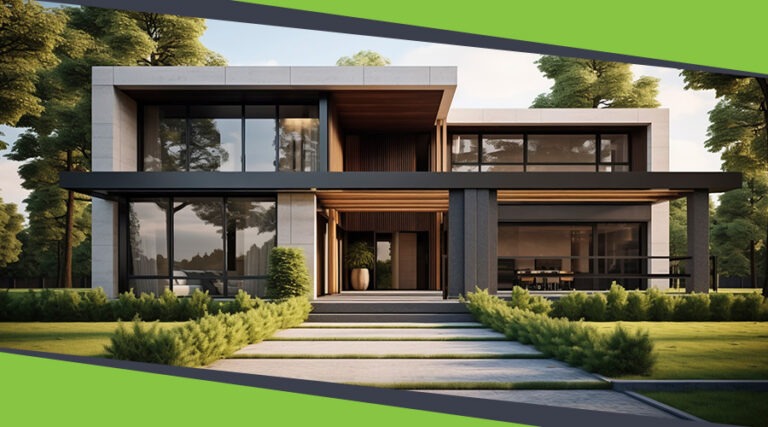
Discover our architectural design excellence through a curated selection of projects.
Explore more
Take a look at how Uppteam can elevate your projects with expert engineering solutions.
Explore more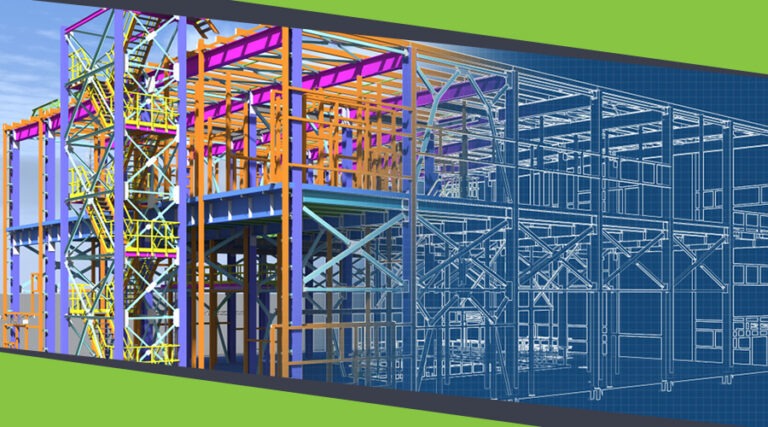
Our Structural Support Services can enhance your structural engineering projects with expert support.
Explore more
Uppteam delivers precise and reliable surveying and mapping solutions to help you make informed decisions.
Explore more
Whether you're working on residential, commercial, or industrial buildings..
Explore more
Uppteam’s Virtual Admin Support can help you with all your administrative tasks..
Explore more
Our experts work as your 3rd party quality control support partner.
Explore more
Sreela Biswas 
Often, civil design is perceived as just a checklist item in the AEC spectrum. This means that many AEC businesses still view civil design as merely an administrative challenge to satisfy municipal regulators. Nevertheless, this compliance-centric mindset neglects a vital reality about contemporary construction projects.
In fact, civil engineering is actually an AEC firm’s first line of defense to counter long-term liability and economic loss. Essentially, it indicates the site’s financial viability before the first foundation work commences.
By changing the mindset from mere permitting to aggressive risk management, AEC companies can safeguard their clients from millions of unexpected expenses. This preemptive approach converts a mandatory cost into a crucial asset for a project’s stability.
This blog article will walk you through the reasons for considering modern civil design as a risk management tool rather than just a compliance mandate.
Do you know where the most detrimental economic losses arise in a construction project? Well, the answer is from risks that are technically detectable but are actually ignored.
Remember that a holistic civil design procedure starts with proactive due diligence beyond basic zoning authentications. We seldom see developers focus solely on perfecting sites that later require millions in remedial foundation work. The simple reason behind this is that preliminary reviews are trivial.
Therefore, robust feasibility studies are the best approach to identifying important limitations, such as unstable soil strata or high water tables, early in the project’s stages.
Such a degree of scrutiny facilitates AEC firms in making well-versed decisions with confidence. In return, this helps prevent firms from inheriting liability for recognizable field conditions. Efficient due diligence also provides guidance on the budget for site preparation and infrastructure. As a result, businesses can avoid the embarrassment of having to request additional funds from clients due to unforeseen circumstances.
Currently, 3D modeling technologies enable firms to visualize terrain interactions with top-notch accuracy. This early-stage visualization minimizes design errors and improves communication with stakeholders. Using these tools during feasibility analysis transforms vague concepts into data-centric strategies. So, it is not just about drawing lines; it is more about anticipating the site’s future.
In the built environment, water is the most litigious element. Simply put, if a project causes flooding downstream, the legislative consequences can last for decades.
These days, municipalities across the country are becoming more and more strict. Yet, meeting the code is merely the minimum standard. This is precisely where smart civil design can make a real difference. Rather than depending completely on minimum code requirements, it provides protection against extreme weather events that outpace past data.
There have been cases where developers faced lawsuits many years after selling a property because the stormwater system failed to handle runoff during an extreme weather event. This indicates that a design that somehow meets the code seldom fails when real-life climate conditions change unexpectedly.
In this provision, AEC firms should consider the wider hydrological effects of the development on the surrounding ecosystem to avert negligence claims. Unable to handle stormwater can result in severe property damage, leading to litigation that even settlement negotiations may not easily resolve.
In such a scenario, robust detection strategies should be in place to safeguard the client from future insurance claims and to demonstrate a commitment to sustainable development. This forward-thinking approach lays a flawless path for future project approvals in the same jurisdiction, as regulators would have greater trust in your firm’s engineering rigor.
Moving dirt is among the most variable and risky line items in any construction project budget. Poor grading plans that compel contractors to either import or export large amounts of soil increase fuel costs and project timelines. A tactical civil design can balance cut and fill volumes to keep soil on the field whenever possible. This directly influences the bottom line. Moreover, it calls for an accurate grasp of the prevailing topography and the suggested vertical alignment to curtail waste.
Thus, the following initiatives can be taken to manage construction costs effectively:
Among the most prominent “silent killers” of construction timelines are underground utility conflicts. As a matter of fact, they often remain unidentified until mobilization.
Evidently, conventional 2D plans frequently fall short of showing where storm lines are interacting with prevailing gas mains or electrical conduits. These clashes are generally spotted only when an excavator hits an obstruction. This contributes to work stoppages that cost thousands of dollars every day. Modern-day 3D civil design comes to the rescue by flagging such clashes well before construction work starts. Subsequently, engineers get the flexibility to route utilities around obstacles with top-level precision.
One can think of this virtual construction phase as a digital rehearsal that ensures gravity-fed systems have the required slope without disrupting other infrastructure. Truly, we can now visualize complex intersections that were previously impossible to validate on paper. Accordingly, firms get to experience a dramatic reduction in rework-related risks.
By fixing these issues digitally, firms can shield the project schedule from avoidable delays that disappoint clients. It further harnesses improved collaboration among civil, structural, and MEP teams. In the end, this guarantees that everyone operates from the same source of information.
In most cases, the permitting stage is the biggest barrier in the U.S. construction pipeline. More often, regulatory reviewers are overworked and susceptible to rejecting plans for minor code noncompliance or incomplete data. In reality, a permit delay pushes a project’s start date into a different month, which then escalates material prices and overall project expenditures.
So, it’s understandable that civil design is the basis of risk management for any construction project. It impacts legal liability, economic feasibility, and delivery speed. The time has come for AEC firms in the U.S. to refrain from viewing it as a commodity and to start treating it as a high-stakes strategy.
Evidently, a proactive civil design approach can save money, time, and reputation in the long term. It also makes sure that the site transforms from a variable risk into a manageable asset. Undoubtedly, the current market rewards organizations that deliver predictability in an unpredictable world, and rigorous civil design and engineering are the keys to that stability.
This is the point at which Uppteam becomes your most suitable tactical partner in risk mitigation. Specializing in robust civil design services, we go far beyond just compliance.
Team up with Uppteam to transform your civil design process into a competitive advantage.
Your One-Stop MEP Design Support Solution is Here
Hire Remote Team at an Affordable Price!