All About A/E Staff
How External Design Support is Powering the Next Wave of Infrastructure Delivery
-
 Sreela Biswas
 - December 25, 2025
- 12:45 pm

Complete Architectural Construction Document Production In Your Company Standards
Our degreed and trained architectural designers in India work as an extension of your staff on a monthly and hourly subscription.
Uppteam’s licensed expert MEP designers, operating remotely, collaborate with US AEC firms to deliver code-aligned MEP design solutions.
Offshore structural design experts deliver top-quality, code-compliant designs and documentation for US projects.
Seasoned civil designers remotely provide unmatched support for advancing site development, grading, and utility plans with sheer accuracy.
Cutting-edge 3D modeling and clash-coordinated documentation empower construction-ready
project delivery.
Dedicated offshore admin teams streamline architect, contractor, and engineering workflows.
Independent and guaranteed error-free model audits, clash detection, and construction
document verification by a specialized team.
U.S.-based local architectural representation, ensuring communication, accountability, and delivery expectations, managed close to the client.
Explore more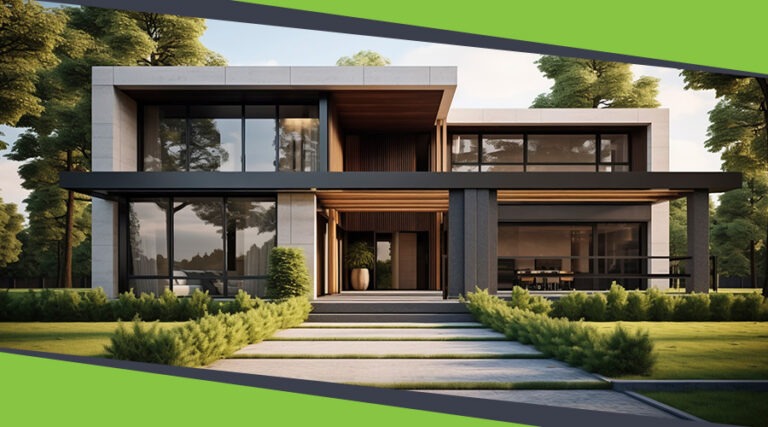
Discover our architectural design excellence through a curated selection of projects.
Explore more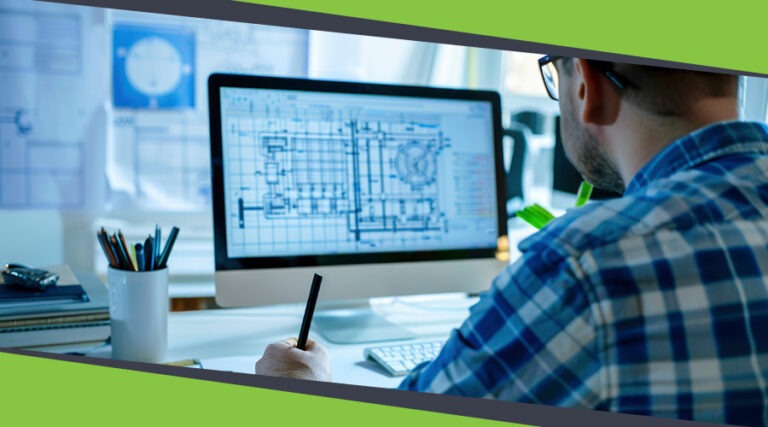
Take a look at how Uppteam can elevate your projects with expert engineering solutions.
Explore more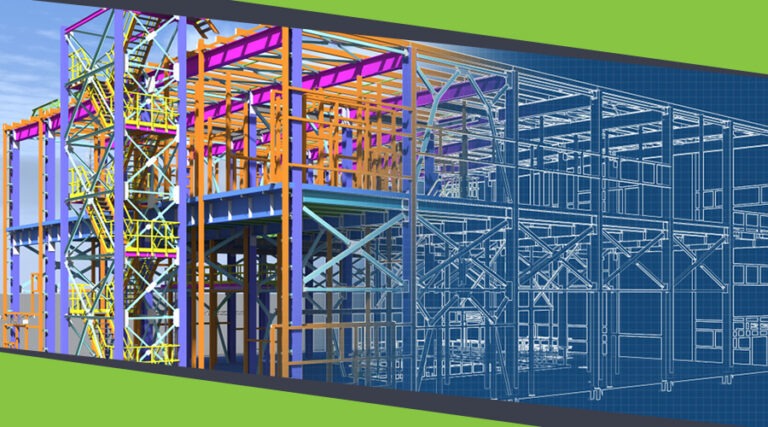
Our Structural Support Services can enhance your structural engineering projects with expert support.
Explore more
Uppteam delivers precise and reliable surveying and mapping solutions to help you make informed decisions.
Explore more
Whether you're working on residential, commercial, or industrial buildings..
Explore more
Uppteam’s Virtual Admin Support can help you with all your administrative tasks..
Explore more
Our experts work as your Second Eye Services expert.
Explore more Sreela Biswas
A closer look at the contemporary AEC industry in the U.S.A. reveals that firms are under growing pressure to complete infrastructure projects faster and within tighter budgets than before. This sector is consistently grappling with rising labor shortages, elevated material expenses, and unmatched complexity in building systems coordination.
As per a recent industry analysis, 89% of US-based AEC companies report struggling to find skilled, qualified workers. The engineering and construction sector has projected that it will need around 499,000 new workers by the end of 2026. What is interesting to understand is that such workforce limitations explicitly squeeze project schedules and burden team capacity.
In this scenario, external design support services have surfaced as a revolutionary solution, facilitating firms in speeding up infrastructure delivery without compromising quality. These services also ensure robust adherence to U.S.-specific building codes and standards.
When it comes to delivering complex construction projects on time, the sector faces persistent challenges. Lack of sufficiently skilled laborers is the main challenge. It has been noted that the AEC services sector is unable to consistently supply enough competent workers to meet demand. The direct impact of this workforce gap is seen in delayed project completion, compressed design cycles, and weak coordination across verticals. This leads to cascading delays across the project delivery process.
On the other hand, material price volatility is still on the higher side, further stretching project economics and pressuring firms to improve each operational component. On top of workforce limitations, contemporary infrastructure mandates intricate coordination among structural, architectural, and MEP verticals. When design conflicts arise during construction, remediation can become quite expensive.
Recent studies in this domain demonstrate that rework constitutes around one-third of overall project expenditures. These reworks generally result from design mistakes and ineffective coordination. The biggest drawback of traditional sequential design procedures is that clashes appear when on-site work is already underway. As a result, change orders and schedule delays turn out to be expensive affairs, undermining project profitability and delivery timeframes.
If your firm is seeking to infuse niche expertise directly into complex infrastructure projects, the solution is tactical external design support. These days, AEC companies are progressively accessing external support. It is helping them gain instant access to professionals who are thoroughly knowledgeable about U.S.-based building codes, International Plumbing Code standards, International Building Code specifications, National Electrical Code norms, and NFPA guidelines.
These experts are the perfect extensions of in-house teams. They benefit AEC firms by enabling accurate resource scaling and matching project requirements. The external design support brings next-level flexibility that enables these firms to respond vigorously to market fluctuations. When project pipelines extend abruptly, firms can quickly increase their design capacity without incurring additional permanent hiring costs.
On the contrary, during slower periods, resource levels adjust instinctively. This helps safeguard operational margins. This degree of scalability is especially valuable for construction projects with multiple phases, where design intensity varies throughout the delivery schedule.
Another measurable advantage is cost-effectiveness. Through the outsourcing of particular design functions, AEC companies can reduce in-house expenses, curtail facility expansion needs, and avoid expenditures linked with recruiting and training permanent employees. Many firms have confirmed that tactical outsourcing has enabled them to expand operations and execute larger-scale projects without a proportional increase in fixed expenses.
It is crucial to appreciate that time zone differences lead to an unexpected strategic edge. Work finished at the end of one team’s day moves forward overnight. This creates a near-24/7 workflow that supports shortening project timelines.
In construction projects, it is key to understand that acceleration mechanisms run at multiple levels. BIM coordination comes as a game changer, standing at the core of delivery acceleration. When external BIM experts unify structural, architectural, civil, and MEP models into coordinated digital settings, design-related conflicts come up during planning. Here, cutting-edge clash detection tools spot and address system conflicts automatically. As a result, there is a notable reduction in expensive rework.
The top US-based contractors, having implemented robust BIM coordination, reported that they have experienced 25% reductions in project rework. Bespoke tools, such as Navisworks and Revit’s interference check features, automate conflict detection. Consequently, teams become capable of overcoming issues digitally rather than going on-site. When an AEC firm engages external design early in the process, it enjoys a rapid review of code feasibility. This ensures that a project advances efficiently through the permitting stages.
External design support also brings concurrent engineering techniques to the table, facilitating the overlap of conventional sequential phases. The result? As architectural systems move toward construction documentation, MEP design advances in parallel with structural refinement. This parallel progression approach substantially compresses the overall project timeline that traditional approaches cannot match.
Bear in mind that contemporary infrastructure projects call for extreme technical depth throughout all disciplines. External design support comes into play by maintaining specialists with dedicated proficiencies in structural analysis, civil engineering principles, MEP system integration, and building envelope improvement.
These professionals understand the layered requirements of NEC regulations, IPC standards, and OSHPD compliance when relevant for healthcare infrastructure elements. Niche knowledge goes beyond fundamental code adherence into innovative technical applications. Structural experts pursue load analysis, assess seismic specifications, and optimize material choices for cost efficiency and durability.
MEP coordinators are responsible for ensuring that electrical panels, HVAC systems, plumbing networks, and fire protection systems work harmoniously within architectural constraints. Civil specialists work on developing drainage strategies, grading plans, and utility coordination consistent with municipal protocols.
Moreover, quality control mechanisms encapsulated in professional external support guarantee that deliverables are always fulfilling the firm’s standards. Seasoned coordinators play a crucial role here. They review work against verified templates, authenticate code conformance, validate drawing completeness, and confirm clash-free coordination. All these are expertly done before the final project delivery. This QA procedure makes sure that there are minimal delays and rework in the project, expediting the delivery process.
It is certain that when an AEC business partners with an external design support provider, it can accomplish a project on time, successfully, without increasing the internal workforce. Small architectural practices that used to limit projects to in-house capacity can now carry on multiple concurrent engagements by exploiting external support for production-heavy phases. Likewise, large-scale firms can expand their geographic presence by accessing regional expertise and production assistance without needing to establish a full office infrastructure.
It should be acknowledged that specialized support teams develop a detailed familiarity with drafting conventions, project standards, and quality expectations for effortless integration with in-house operations. This alignment speeds up onboarding cycles and diminishes learning curves usually connected with new collaboration. Besides, with time, dedicated teams become reliable extensions of AEC firms, delivering work consistently and with quality indistinguishable from that of a permanent workforce.
Real-world examples and research prove that cloud-centric collaboration platforms facilitate live coordination irrespective of physical location. This allows for early-stage clash detection that positively affects project schedules. Without a doubt, remote AEC teams guarantee considerable cost savings through the elimination of office space requirements and reduction of overhead expenditures. They also get to enjoy specialized expertise, which may be unavailable locally.
Evidently, AEC companies taking advantage of external BIM coordination constantly sustain expedited timelines while boosting design quality.
Strategic thinking regarding resource usage and team composition is a pivotal part of modern infrastructure delivery. Acknowledging external design support as a capability booster positions AEC firms ahead of the competition with assured, sustained growth.
Uppteam’s holistic design support service solutions effectively deal with infrastructure delivery bottlenecks for AEC firms in the U.S. Reach out to us now for collaboration and ensure you become a leader in the next wave of infrastructure delivery.
Your One-Stop MEP Design Support Solution is Here
Hire Remote Team at an Affordable Price!