All About A/E Staff
Construction Safety-By-Design: Detailing That Reduces Field Risk
-
 Sreela Biswas
 - December 1, 2025
- 1:08 pm

Complete Architectural Construction Document Production In Your Company Standards
Our degreed and trained architectural designers in India work as an extension of your staff on a monthly and hourly subscription.
Uppteam’s licensed expert MEP designers, operating remotely, collaborate with US AEC firms to deliver code-aligned MEP design solutions.
Offshore structural design experts deliver top-quality, code-compliant designs and documentation for US projects.
Seasoned civil designers remotely provide unmatched support for advancing site development, grading, and utility plans with sheer accuracy.
Cutting-edge 3D modeling and clash-coordinated documentation empower construction-ready
project delivery.
Dedicated offshore admin teams streamline architect, contractor, and engineering workflows.
Independent and guaranteed error-free model audits, clash detection, and construction
document verification by a specialized team.
U.S.-based local architectural representation, ensuring communication, accountability, and delivery expectations, managed close to the client.
Explore more
Discover our architectural design excellence through a curated selection of projects.
Explore more
Take a look at how Uppteam can elevate your projects with expert engineering solutions.
Explore more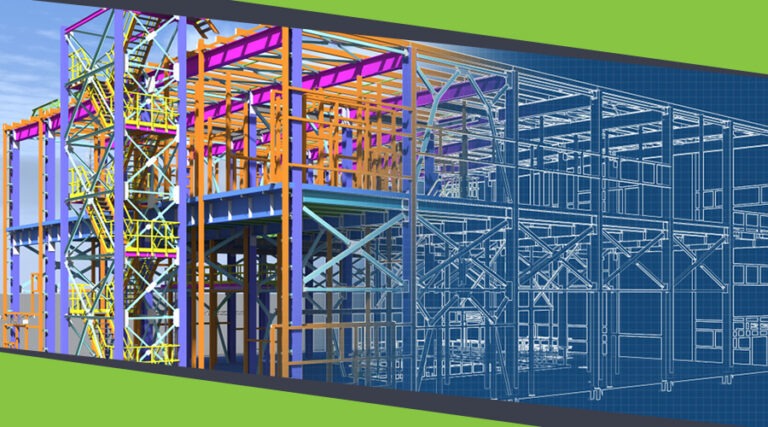
Our Structural Support Services can enhance your structural engineering projects with expert support.
Explore more
Uppteam delivers precise and reliable surveying and mapping solutions to help you make informed decisions.
Explore more
Whether you're working on residential, commercial, or industrial buildings..
Explore more
Uppteam’s Virtual Admin Support can help you with all your administrative tasks..
Explore more
Our experts work as your Second Eye Services expert.
Explore more Sreela Biswas
Those associated with the construction industry know that construction work has a high accident rate. A more interesting fact is that design-related factors account for over two-thirds of construction fatalities in the U.S.
It is key to acknowledge that construction risk is not merely a field issue. Instead, it basically starts on the drawing board.
However, designing for safety from the very beginning can stop many field accidents. Besides, to eliminate harm, OSHA and NIOSH endorse “Prevention through Design” (PtD). This is closely related to the concept of safety-by-design. Fundamentally, PtD helps recognize hazards very early and eradicate them before the first brick is laid.
In reality, AEC firms are now embedding safety into plans and 3D models. With construction safety-by-design, U.S.-based AEC companies incorporate risk mitigation into MEP, architectural, and structural detailing to reduce on-site hazards.
By implementing this progressive approach, project teams can reduce injury rates, improve constructability, and significantly simplify construction work. In fact, this method helps AEC organizations align design intent with secure execution by leveraging proactive design choices to build smart, not just harder.
One of the most important factors to understand in this context is that the idea of safety-by-design in construction is rooted in NIOSH’s Prevention through Design initiative. The primary aim of PtD is to design out or decrease occupational hazards prior to reaching the actual site. The National Institute for Occupational Safety and Health leads this effort in the U.S., endorsing risk eradication early in a project’s life cycle.
The ANSI/ASSP Z590.3 standard provides formal guidance on including PtD concepts in design and redesign procedures. The focus of these standards is to help safety professionals remove hazards impacting worksites, tools, equipment, and workflows.
Experts who adhere to PtD review models conduct safety risk evaluations and refine plans to lower long-term risk. The use of PtD also ensures the elimination of the most serious hazards through engineering controls. This method is not reliant on administrative or personal protective measures. As a result, the majority of AEC businesses currently view PtD as a value-add rather than just a compliance initiative.
Design choices remain the backbone of facility configuration and components. Evidently, they directly affect construction methods and worker exposure. Early-phase design changes offer the best opportunity to eliminate hazards cost-effectively. Many studies have repeatedly confirmed that, in construction, design-related accidents mostly involve falls from unsafeguarded platforms, elevated work areas, and skylight openings.
OSHA construction standards reference several opportunities for engineers to incorporate safety features into structural designs. Subparts involving fall protection, scaffolding, and steel erection require particular design-stage safety considerations.
Evidence from real-world construction and multiple research studies indicates that early-phase design choices have a significant impact on field safety. For example, when anchor points are embedded in structural steel, they facilitate safe fall protection during erection. Architects can pinpoint guardrails or parapets in design with the purpose of avoiding the need for temporary, risky installations later.
On the other hand, MEP engineers can coordinate utilities to stay away from hidden hazards—like inaccessible shut-off valves—during construction. Moreover, concerning civil design, it is vital to incorporate trenchless techniques for underground work. The benefit of this approach is the reduction of risks related to trench collapse.
Understandably, such detailing substantially reduces rework, decreases risk, and guarantees secure access for workers until the very end of the build process.
U.S.-based AEC businesses can adopt practical, specific detailing strategies to reduce on-site risk. Embedded anchor points for fall protection systems are among the most valuable safety features that design can provide. These permanent connections provide guardrails, lifelines, and scaffolding without requiring workers to improvise attachment solutions at height. Remember that parapet walls with a minimum height of 42 inches serve as guardrails throughout construction and building operations.
Prefabricated stairway systems are also helpful when installed early in the construction process. They provide safer vertical access than fixed ladders. Windowsill heights stipulated at 42 inches above floor level serve as integrated guardrails during the interior build-out. Besides, skylights mapped out with shatterproof glass can eliminate fall-through risks, and there is no need for covers or extra protection measures.
Connection detailing for structural steel provides more opportunities to avert installation risks. Joist members of 40 feet or longer should have bolt holes for preliminary connections. Consequently, workers are no longer required to execute temporary welding at height. To ensure safe attachment points during erection for guying and plumbing cable, vertical stabilizer plans on columns are increasingly becoming the industry norm. Lastly, HVAC units must be located at grade, not on rooftops. This method helps reduce fall exposure during installation and future maintenance initiatives.
Extensive technological advancements have enabled the construction industry to adopt cutting-edge tools that empower the safety-by-design approach. Thorough BIM models are well-equipped to help project teams visualize risks before construction commences.
For instance, 3D coordination enables successful clash detection among MEP, structural, and architectural systems, spotting feasible safety discrepancies early. Virtual simulations—such as access paths and installation sequencing—assist in assessing constructability from a safety standpoint.
Thanks to cloud-based platforms, all stakeholders can now see the standardized coordinated model, ensuring that safety-critical details are visible and up to date. Furthermore, because BIM workflows support what-if analysis, designers can examine alternative construction methods to minimize risk.
In ensuring safety, independent quality control plays an essential role. It verifies the exact conversion of design intent into construction documents and fabricated elements. 3rd-party inspectors deliver objective evaluations free of conflict of interest. These professionals also spot specification deviations and fabrication mistakes before materials make it to the construction site.
The processes for validating models are also decisive in this context. They actually test BIM data against project requirements, building codes, and safety norms. This validation verifies that designs adhere to accessibility protocols, fire safety specifications, and structural integrity. This organized review procedure ultimately helps detect errors, omissions, and inconsistencies that could become on-site risks if left untreated.
The benefits of quality control in the context of field safety involve:
It is widely accepted in construction that renovation and retrofit projects entail risks from unknown or poorly documented conditions. Laser scanning comes to the rescue by capturing precise spatial data and creating point clouds that reflect the as-built layouts. Scan-to-BIM translates this data into models that support design and planning.
Virtual site assessments are also necessary, as they enable safety teams to detect risks without setting foot on the site. Crews can see voids, damaged components, and access limitations early. Clash detection keeps surprises at bay, preventing risky fixes. Here, Scan to BIM provides teams with comprehensive spatial intelligence of prevailing structures. Accurate measurements ensure that there are fewer errors and minimal field modifications.
So, construction safety-by-design signifies a fundamental shift from reactive protection initiatives to proactive risk mitigation. This has only been possible by means of knowledgeable detailing choices. Both research and practical evidence ensure that design decisions directly affect on-site safety outcomes, and the majority of serious injuries stem from preventable exposures created on drawing boards.
The hierarchy of controls positions elimination at the core of efficient safety strategies. AEC companies have clear opportunities to curtail worker risks using enduring safety properties, coordinated installation sequences, and validated fabrication quality.
Uppteam’s BIM coordination, 3rd-party QC, and Scan-to-BIM services explicitly support safety-by-design goals for U.S.-based construction projects. We develop effective coordinated models that help spot conflicts before they become serious field hazards. Through autonomous quality reviews, Uppteam verifies safety features specified in the design to reach the construction site as intended. Our team also helps with precise documentation of existing conditions, thereby eliminating dangerous assumptions during renovations.
Reach out now and partner with us to ensure top-notch construction safety-by-design to reduce on-site risks.
Your One-Stop MEP Design Support Solution is Here
Hire Remote Team at an Affordable Price!